Why Ayodhya Is the Most Sacred City of the Ramayana
Ayodhya is one of the Sapta Moksha Puri — the seven cities in Hindu tradition whose very soil is believed to grant liberation to those who breathe, pray, and depart from them. Among these seven, Ayodhya holds a singular distinction: it is the birthplace of Maryada Purushottam Lord Ram, the seventh avatar of Vishnu, and the living embodiment of Dharma in human form.
The city stands on the southern bank of the Sarayu river in the heart of Uttar Pradesh, and has been a centre of spiritual life for at least three thousand years. What makes Ayodhya unique among all pilgrim destinations in India is that its sacredness is not merely theological — it is biographical. Every lane, every ghat, every temple here is connected to a specific moment in the life of Ram, Sita, Lakshman, or Hanuman. A pilgrim does not visit a monument in Ayodhya; they walk through memory itself.
The consecration of the grand Ram Lalla temple on 22 January 2024 has infused the city with a renewed spiritual energy felt by every visitor. But Ayodhya's sanctity was never absent — it simply waited, as devotion always does, with patience and certainty.
The Ramayana's Living Geography
The Valmiki Ramayana describes Ayodhya as a city twelve yojanas long and three yojanas wide, adorned with gardens, mansions, and the constant sound of Vedic chanting. King Dashrath ruled here from the palace that now corresponds to the Ramkot area of the city — a truth preserved not in archaeology alone but in the unbroken memory of generations of devotees who have circumambulated the same ground for centuries.
The Ramayana's central drama — Ram's birth, his fourteen-year exile, his war against Lanka, and his triumphant return — begins and ends in Ayodhya. His birth in the inner sanctum of the Kaushalya palace is the cosmic event that the Ram Janmabhoomi temple now commemorates. The Sarayu river is where Ram performed his janma-tithi rituals, where Sita bathed before their wedding journey, and where Ram finally departed from the mortal world in the event known as jal samadhi.
The Atharvaveda mentions Ayodhya as a divine city built by the gods themselves. The Skanda Purana devotes an entire section to its sanctity, declaring that a single dip in the Sarayu on Kartik Purnima equals the merit of a hundred Ashwamedha yagnas. For a devotee of Ram, standing on the banks of the Sarayu is to stand at the edge of the divine.
Sacred Glimpses
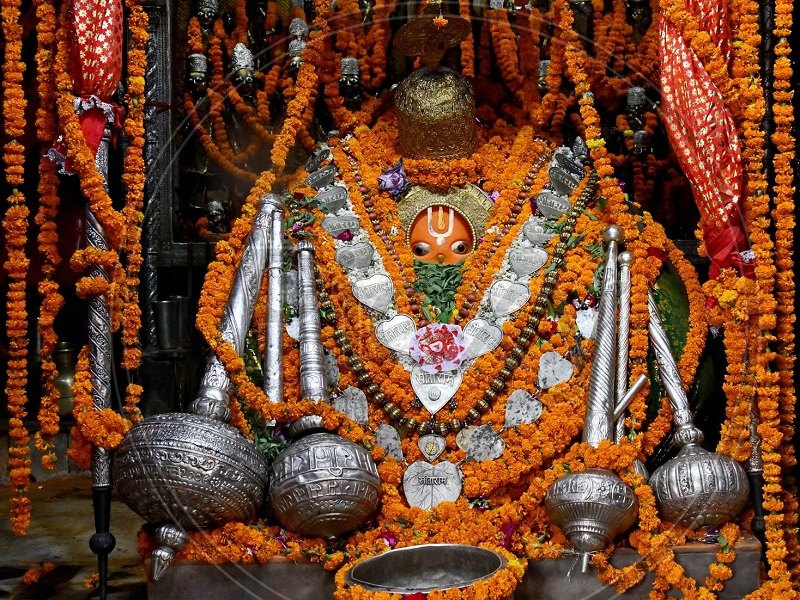

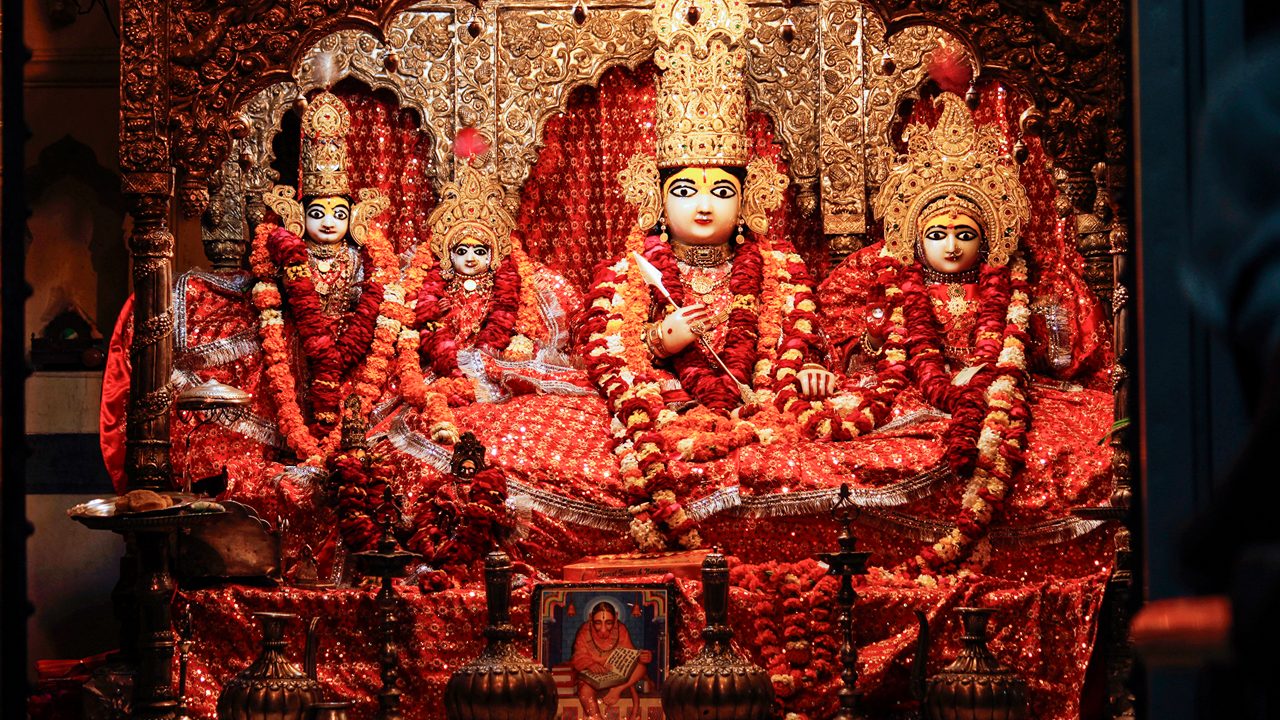
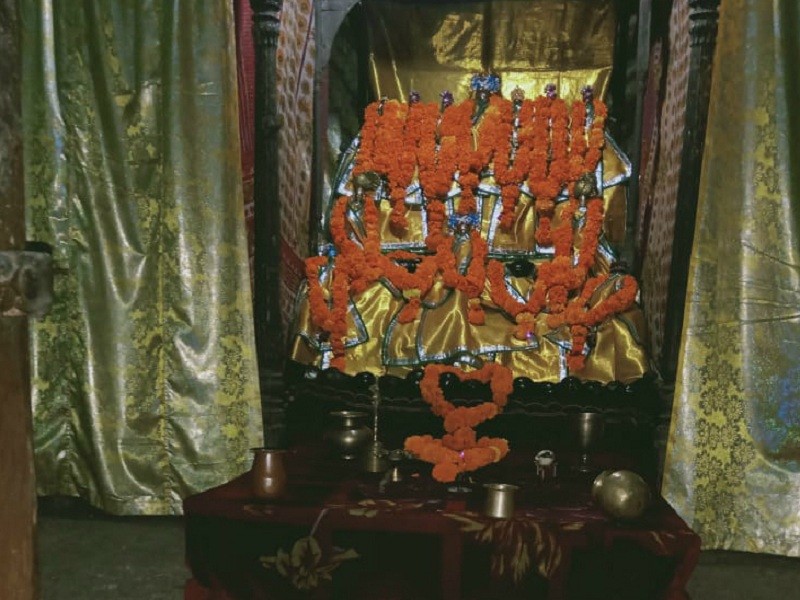
Hanuman Garhi, Ayodhya
Ram Janmabhoomi & the New Ram Lalla Temple
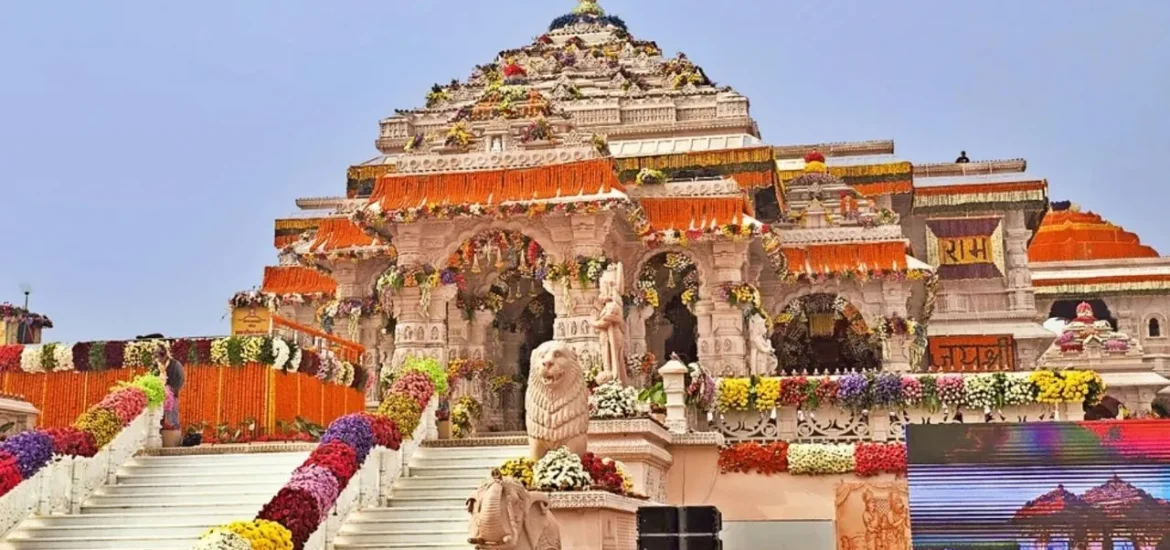
The Ram Lalla temple — officially the Shri Ram Janmabhoomi Mandir — is built on the precise site identified in tradition, scripture, and centuries of devotion as the birthplace of Lord Ram. Consecrated on 22 January 2024, the temple is constructed in the Nagara style of architecture using pink Rajasthani sandstone from Bansi Paharpur, with intricate carvings depicting scenes from the Ramayana covering every pillar and wall.
The inner sanctum houses the idol of Ram Lalla — Ram as a child of five years — in a posture of divine innocence and cosmic authority simultaneously. The idol, carved from a single piece of Krishna shila (dark stone) found in Nepal, is dressed in royal garments and adorned with gold. Darshan here is an experience unlike any other: the silence of the sanctum, the scent of flowers and incense, and the simple sight of the child-god carry a weight that reduces most devotees to tears.
The complex also includes temples to Sita-Ram, Lakshman, Hanuman, and Saraswati. The underground excavation museum at the site displays thousands of artefacts — sculptures, pillars, coins, and ritual objects — recovered during the legal and archaeological process, offering a tangible encounter with the city's 2,500-year-old devotional history.
✦Practical Tips
- ›Darshan queues begin forming as early as 4:30 AM. Arriving before 6 AM ensures a quieter, more contemplative experience.
- ›Mobile phones are not permitted inside the sanctum. Deposit them at the cloak room before entering.
- ›Dress code is strictly traditional. Shorts, sleeveless garments, and torn clothing are not allowed.
- ›Special puja bookings for Ram Lalla can be made online through the temple trust portal.
The Essential Sacred Sites of Ayodhya
Hanuman Garhi is the first temple most pilgrims visit upon arriving in Ayodhya, as tradition holds that Hanuman guards the city and must be approached before Ram. Set atop a small hill reachable by 76 steps, the temple houses a large idol of Hanuman cradling the infant Ram — a form that appears nowhere else in India. The view of Ayodhya's rooftops, domes, and the gleaming spire of the new Ram Mandir from the top is breathtaking at sunrise.
Kanak Bhavan — literally the 'Palace of Gold' — is considered one of the most spiritually charged temples in the city. Legend holds that Queen Kaikeyi gifted this palace to Sita as a wedding present, and that Sita and Ram personally consecrated the idols here. The temple houses Ram and Sita in married, royal form — both bedecked with extraordinary gold jewellery — and is distinctive for the warmth and intimacy of its ambiance. Devotees feel as though they are guests in a royal household rather than visitors to a temple.
Nageshwarnath Temple is among the most ancient temples in Ayodhya, believed to have been established by Kush, the son of Ram. It houses a Shivalinga and is the site of the city's most important Mahashivratri celebrations. Treta Ke Thakur, nearby, preserves the black stone idols of Ram, Sita, Lakshman, Bharat, Shatrughan, and Hanuman that are said to have been the objects of Ram's own worship during the Treta Yuga.
The Sarayu Ghats: Where Heaven Meets the River
The Sarayu — or Sarju, as locals lovingly call her — is not just a river. She is the thread that stitches Ayodhya to its divine past and brings it forward into the present moment. Ram Ki Paidi, the main ghat complex along the Sarayu, stretches over a kilometre and is lined with stone steps, small temples, and the ever-present fragrance of marigolds and agarbatti. At dawn, the mist rising off the water and the sound of conch shells from a dozen temples creates an atmosphere that the word 'peaceful' cannot adequately describe.
The evening Sarayu Aarti at Ram Ki Paidi is modelled on the Ganga Aarti at Varanasi and has rapidly become one of the most beloved experiences in the city. Priests in saffron robes perform the aarti simultaneously along the ghat as evening falls, and the river turns into a mirror of fire and gold from the thousands of diyas floating upon it. During Diwali, the entire Sarayu bank is illuminated with over 5 lakh diyas — a spectacle that makes it the largest lamp-lit celebration in the world.
Swargadwar Ghat is considered the most auspicious place for last rites and pind daan in Ayodhya, as the Sarayu is believed to carry the departed directly to the divine realm. A sacred bath at Brahmakund on Ekadashi or Purnima tithis is believed to absolve sins across seven generations.
Rituals & Experiences Every Pilgrim Must Observe
Begin with Sarayu Snan — a ritual bath in the river — ideally before sunrise. The sankalpa (vow) taken while standing in the Sarayu, facing east, is believed to receive Ram's personal attention. After bathing, offer water to the rising sun and walk barefoot to Hanuman Garhi for the first darshan of the day.
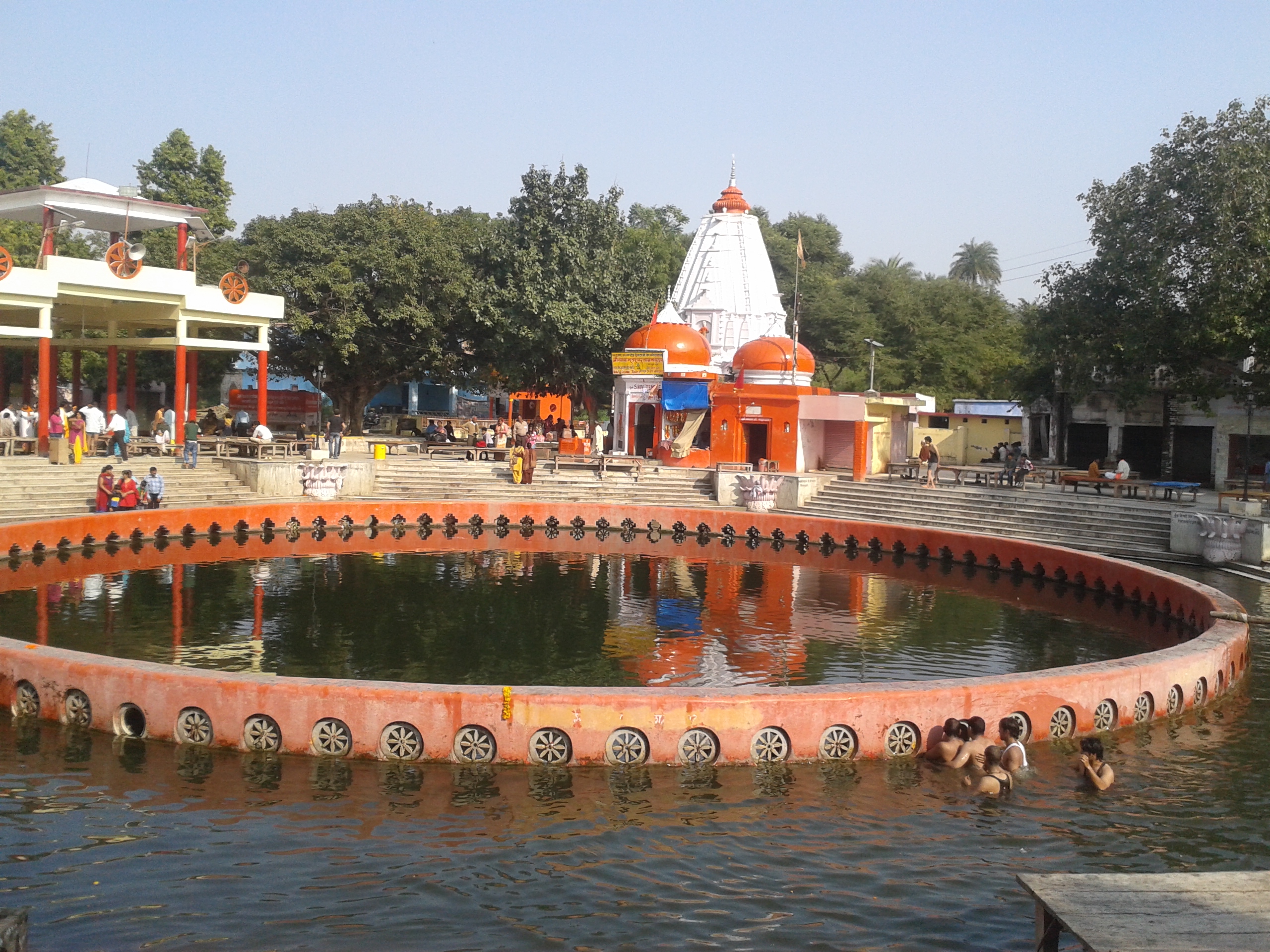
The Panchasnan — a circuit of five sacred ponds — is a traditional practice of committed pilgrims. This includes Brahmakund, Suryakund, Vasisthakund, Durvasekund, and Saptasarovar. Bathing in all five in sequence on auspicious tithis is said to grant the merit of completing the four Char Dhams. Pancharanga, the tradition of offering five types of garlands at Ram Lalla's temple, is another ritual unique to Ayodhya.
The Parikrama — a circumambulation of the entire Ramkot hill on which the Ram Mandir stands — is approximately five kilometres. It is walked barefoot by devout pilgrims, usually early in the morning. Many senior pilgrims perform this parikrama every day during their stay. A longer parikrama route of fourteen kilometres encircles the entire sacred precinct of Ayodhya and passes through the sites associated with Ram's fourteen-year exile.
Festivals: When Ayodhya Transforms the World
Ram Navami — the birthday of Lord Ram, falling on the ninth day of Chaitra (March-April) — is the grandest festival of Ayodhya. The entire city moves into a state of celebration ten days before and the main celebration includes a massive procession from Hanuman Garhi to the Ram Mandir, free langar (community meals) across the city, and continuous Ram Katha recitations. The Ram Lalla idol is given an elaborate abhishek (sacred bath) with pancha amrit — milk, honey, ghee, curd, and sugar — and worshipped in royal regalia.
Diwali at Ayodhya is the Diwali of Diwalis. Celebrated as Deepotsav by the Uttar Pradesh government since 2017, the festival commemorates Ram's return from exile after fourteen years. The entire Sarayu bank, the Ram Mandir complex, and every street in the old city is lit with diyas. In 2023, over 22 lakh earthen lamps were lit simultaneously, setting a Guinness World Record — and every year the number grows.
Vivah Panchami, celebrating Ram and Sita's wedding, brings a different quality to Ayodhya — softer, more intimate, with floral decorations throughout the city and the ceremonial re-enactment of the wedding in the main temples. Kartik Purnima, Makar Sankranti, and Navratri each bring their own rhythms and colours to the city's spiritual calendar.
Best Time to Visit & Practical Planning
October through March is the ideal window for visiting Ayodhya. The weather is cool and clear, the river is calm, and most festivals fall within this period including Diwali (October-November), Vivah Panchami (November-December), Makar Sankranti (January), and Ram Navami (March-April). The morning mist on the Sarayu during December and January creates an almost mystical atmosphere that is unlike any other time of year.
April through June brings increasing heat, and the summer months of May-June can see temperatures exceeding 44°C, which makes long walks and parikrama physically demanding. Monsoon season (July-September) transforms the Sarayu into a formidable river that often floods the lower ghats, but the city's temples remain accessible and relatively uncrowded.
Ayodhya is connected by rail — Ayodhya Junction and the new Ayodhya Dham railway station both serve the city from major cities. The nearest airport is Maharishi Valmiki International Airport, inaugurated in December 2023, which receives flights from Delhi, Mumbai, and several other cities. From Lucknow (130 km), the journey takes approximately two hours by road or train.
✦Practical Tips
- ›Stay at least two full days — one for the Ram Janmabhoomi complex and one for ghats, temples, and parikrama.
- ›Book accommodation three to four weeks in advance for Ram Navami and Diwali — the city fills completely.
- ›Wear light cotton clothes with a shawl — the mornings and evenings can be cool even in March.
- ›Senior citizens should hire a cycle-rickshaw or e-rickshaw for the ghat circuits — the lanes are narrow and uneven.
Ideal Journey Combination: Ayodhya + Varanasi + Prayagraj
Ayodhya, Varanasi, and Prayagraj form the supreme triangle of Uttar Pradesh's spiritual landscape. Together, they represent the three forms of the divine in human experience: Ayodhya as the birthplace of righteousness (Ram), Varanasi as the city of transformation and liberation (Shiva), and Prayagraj as the confluence of all sacred rivers and the seat of Brahma's cosmic sacrifice. Completing all three in a single pilgrimage is considered among the highest spiritual acts a Hindu devotee can undertake.
A twelve-day itinerary allows three to four days at each destination. Begin with Ayodhya, where the devotional warmth of Ram bhakti prepares the heart. Proceed to Varanasi for the fire of Shiva's transformation, and conclude at Prayagraj for the Triveni Sangam, where all that was loosened in the earlier two cities is finally released into the sacred confluence.