Following the brief Mangal Darshan, temples perform Mangala Aarti, a more elaborate ritual marking the deity's formal waking for the day. Understanding this ceremony helps pilgrims appreciate why some devotees specifically plan an early arrival around this particular ritual.
What Is Mangala Aarti?
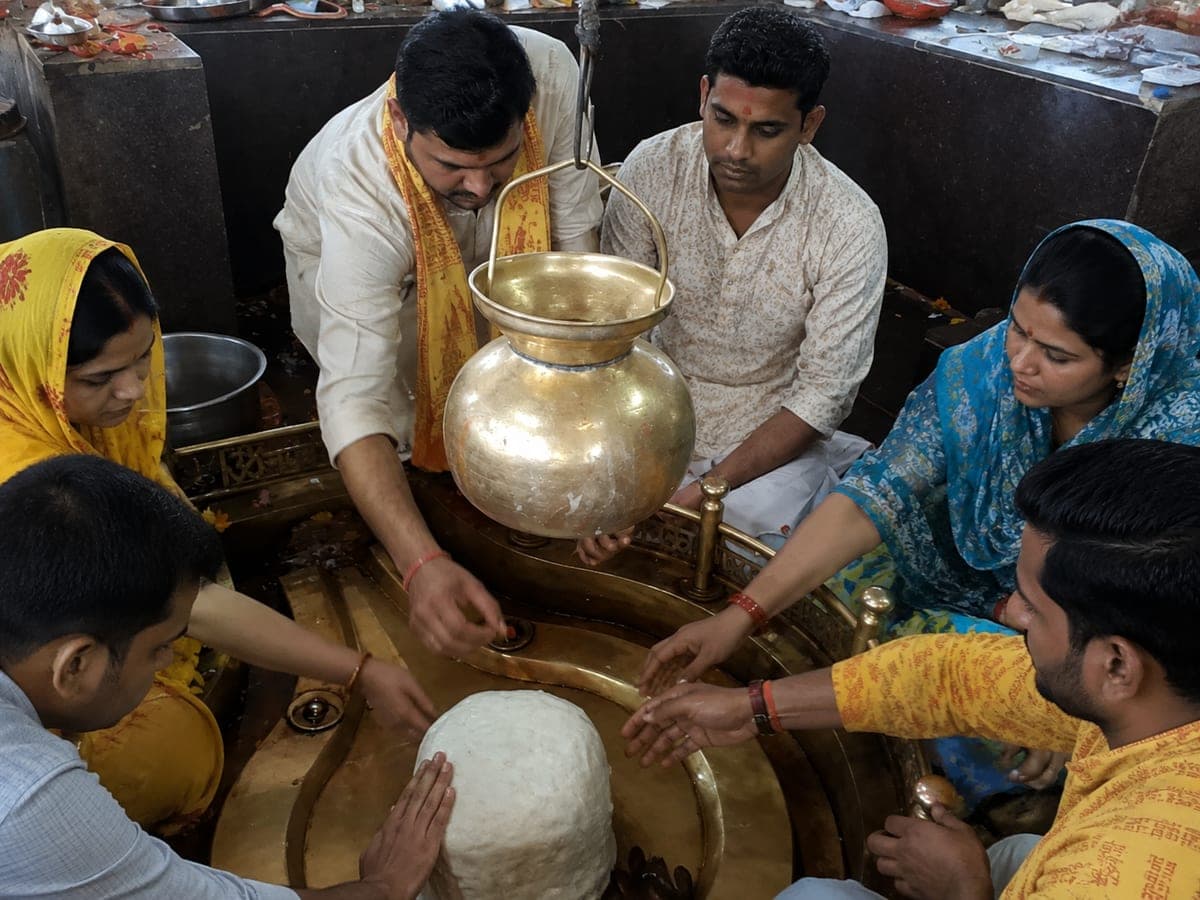
Mangala Aarti refers to the aarti performed shortly after a temple deity is ceremonially woken each morning, typically involving lamps, chanting, and sometimes music, marking one of the most significant rituals within the day's schedule. Many pilgrims specifically arrange Mangala Aarti during their Yatra to mark a personal intention, vow, or family occasion.
Mangala Aarti Across Traditions
This ritual holds particular prominence within certain devotional traditions, such as Pushtimarg and Gaudiya Vaishnavism, where the morning waking and subsequent aarti are treated with considerable ceremonial detail and significance. The exact steps involved in Mangala Aarti can vary somewhat between temples, though the underlying devotional purpose remains broadly consistent across India.
Attending Mangala Aarti During a Yatra
Pilgrims wishing to witness Mangala Aarti should confirm a temple's specific early morning schedule in advance, as timing can vary and this ceremony often occurs well before the temple's main darshan hours begin. Priests performing Mangala Aarti are generally willing to briefly explain the ritual to curious pilgrims, particularly at quieter, less crowded temples.