Behind every correctly performed ritual lies Karmakand, the broader body of ceremonial procedure, and the specialised priests known as Karmakandis who master this demanding tradition. Understanding these related terms helps pilgrims appreciate the training and expertise behind rituals sponsored during their Yatra.
What Does Karmakand Mean?
Karmakand refers to the body of ritual procedures, ceremonial practices, and prescribed rites within Hindu tradition, encompassing everything from daily puja to elaborate yajnas, forming a distinct area of specialised religious knowledge. Devotees often seek guidance connected to Karmakand at specific points during their Yatra, particularly before major rituals or life decisions.
Who Is a Karmakandi?
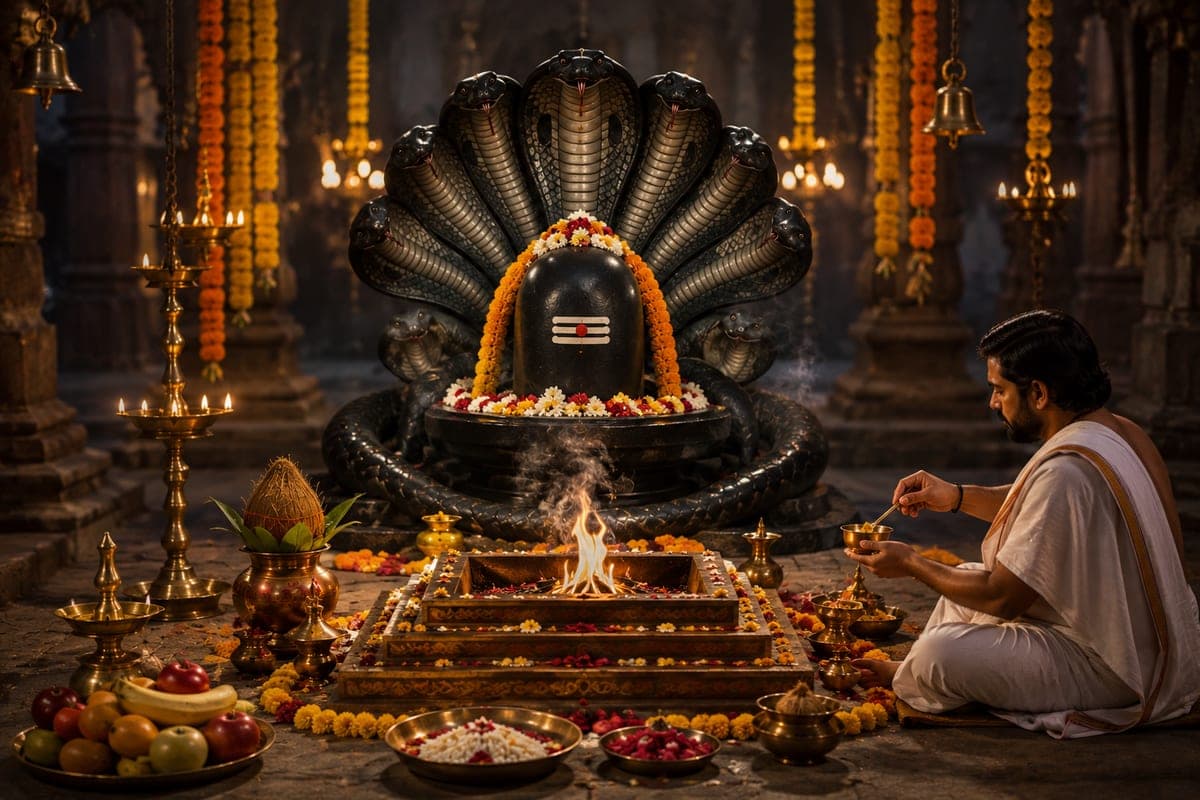
A Karmakandi is a priest specifically trained and specialised in correctly performing Karmakand rituals, having studied the precise procedures, mantras, and sequences required for various ceremonies over an extended period. Pilgrims unfamiliar with the specific role of Karmakand are generally welcome to ask temple staff for a brief, respectful explanation.
Seeking a Karmakandi During a Yatra
Pilgrims sponsoring an elaborate or particularly significant ritual, such as a Rudrabhishek or Navchandi Yagya, often specifically seek a qualified Karmakandi, recognising the specialised expertise required to perform such ceremonies correctly. Many temples maintain their own local tradition regarding Karmakand, shaped by regional custom as much as broader scriptural reference.