Not every abhishek requires an elaborate sequence of substances; Jalabhishek offers a simplified version using only water, making it accessible for regular personal practice. Understanding this variant helps pilgrims appreciate a more frequent, everyday form of worship compared to elaborate temple ceremonies.
What Is Jalabhishek?
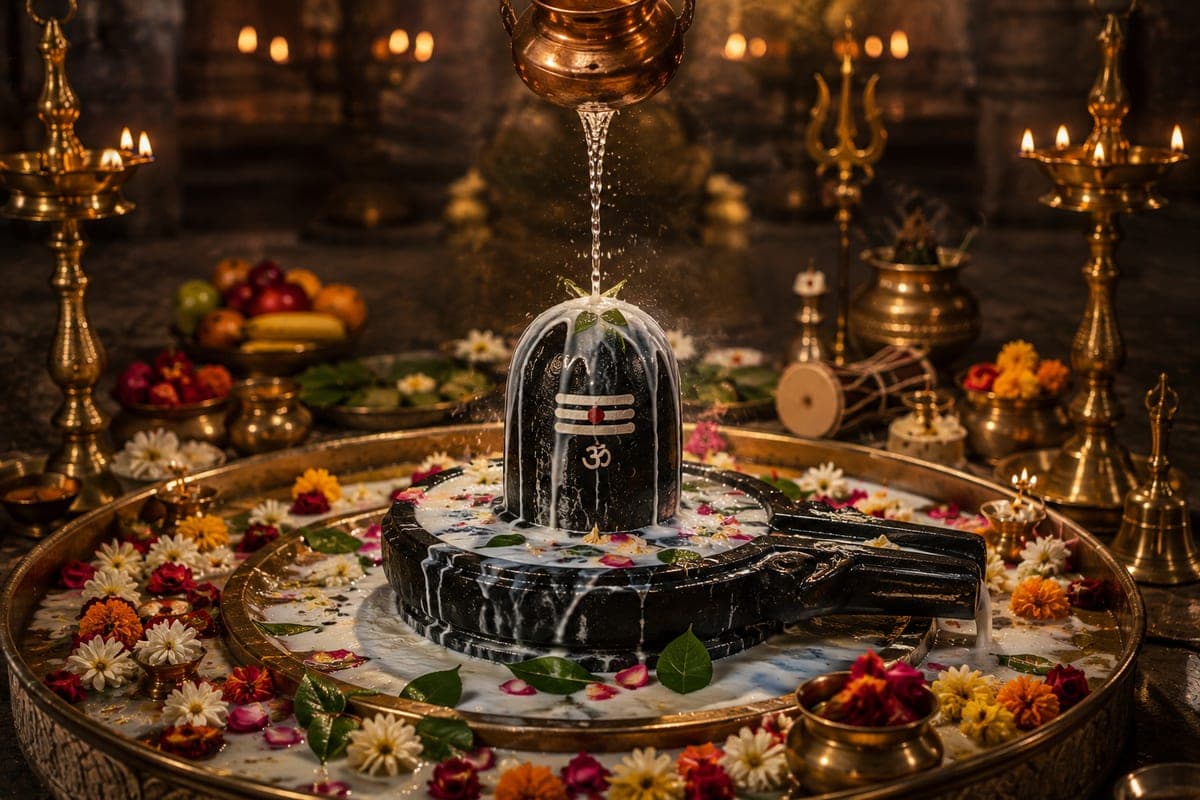
Jalabhishek refers to a simplified form of abhishek performed using only water poured over a deity's image, typically a Shivling, distinguished from the fuller sequence involving milk, honey, curd, and other substances. The exact steps involved in Jalabhishek can vary somewhat between temples, though the underlying devotional purpose remains broadly consistent across India.
Why Jalabhishek Is Commonly Practised
Given its simplicity, Jalabhishek is commonly performed as a regular personal practice, particularly by devotees visiting a Shiva temple daily or those maintaining a home shrine, where a full Panchamrit abhishek may not be practical every day. Priests performing Jalabhishek are generally willing to briefly explain the ritual to curious pilgrims, particularly at quieter, less crowded temples.
Jalabhishek During a Yatra
Pilgrims visiting a Shiva temple, particularly during Shravan month when Shiva worship intensifies, often personally perform Jalabhishek as a simple, direct form of devotion, sometimes standing in a dedicated queue specifically for this purpose. Many pilgrims specifically arrange Jalabhishek during their Yatra to mark a personal intention, vow, or family occasion.