Ujjain: The City That Measures the Universe
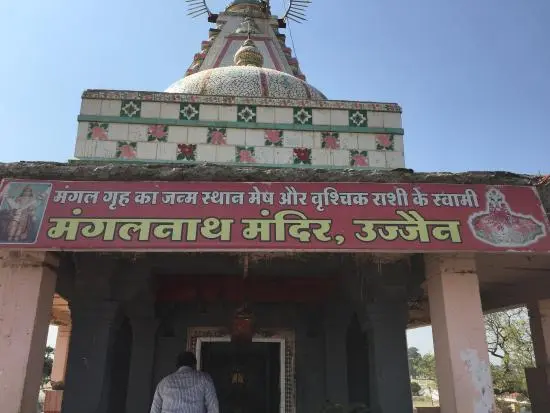
Ujjain is one of the seven moksha-granting cities (Sapta Moksha Puri) of Hinduism, but it holds an additional distinction that no other city on earth can claim: for over two thousand years, Ujjain was considered the prime meridian of India — the zero point from which all geographical and astronomical calculations were made. The ancient observatory Jantar Mantar built here by Maharaja Jai Singh II in the 18th century sits on this meridian, and before that, the Vedic mathematicians and astronomers of Vikramaditya's court used the city's precise geographical position as the anchor for their calendrical calculations.
This connection to time is not coincidental. Ujjain is the city of Mahakal — the Great Time, or the Lord of Time — a form of Shiva that transcends chronological time and represents the consciousness that exists before and after all cycles of creation. The name Ujjain comes from Ujjayini, meaning 'the city that is ever victorious,' and the city has indeed survived empires, invasions, and centuries of political upheaval with its spiritual character intact.
The sacred Kshipra (Shipra) river that flows through Ujjain is considered particularly powerful for ritual bathing, and the Simhastha Kumbh Mela held here every twelve years brings millions of pilgrims to its banks. The city's spiritual calendar is dense with auspicious dates, festivals, and rituals — it is a city where the sacred and the everyday are genuinely indistinguishable.
Mahakaleshwar: The Self-Manifested Jyotirlinga
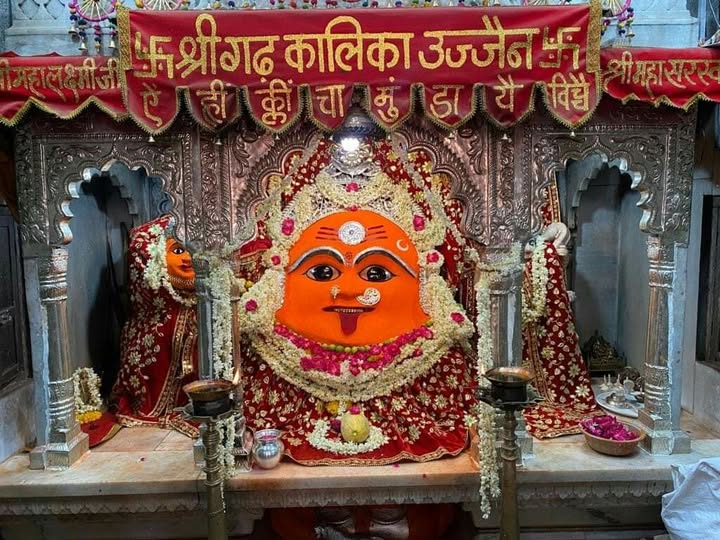
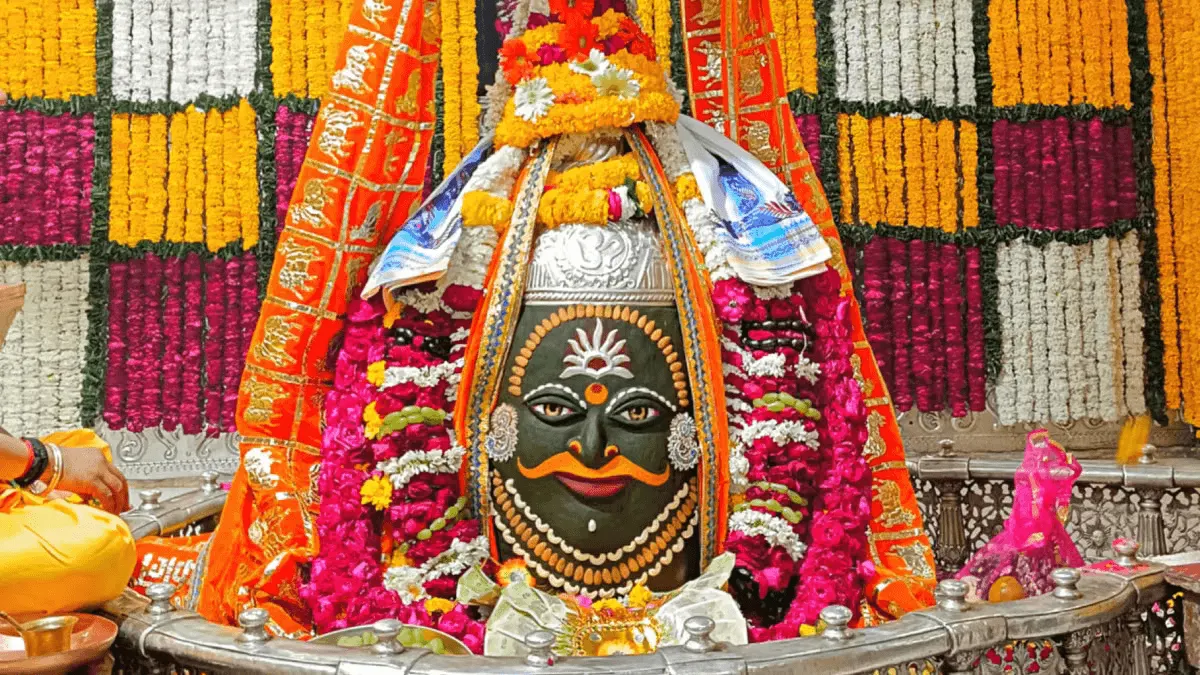
The Mahakaleshwar temple in Ujjain houses one of the twelve Jyotirlingas — the self-manifested forms of Shiva as infinite light that appeared to resolve the dispute between Brahma and Vishnu over supremacy. Each of the twelve Jyotirlingas has its own distinct character and association with Shiva's cosmic functions. Mahakaleshwar's particular role is as the lord of death and time, and it is the only Jyotirlinga that faces south — the direction of the god of death (Yama) — symbolising Shiva's mastery over mortality itself.
The Jyotirlinga is a swayambhu (self-manifested) stone lingam set in the lowest level of the three-tiered temple. Above it, on the middle level, is the Omkareshwar lingam, and on the top level is the Nagachandreshwar temple. The architecture of the current temple, rebuilt in the Maratha period after medieval destructions, is a striking example of the Hemadpanthi style, and the silver-plated walls of the sanctum give the interior a lunar, otherworldly quality.
What makes Mahakaleshwar uniquely powerful in the devotional consciousness of Hindu tradition is the story of its manifestation: when the demon Dushan threatened the city of Avanti (ancient Ujjain) and the devotees of Shiva prayed for protection, Shiva emerged from the earth itself as Mahakal to destroy the demon, and then agreed to remain here permanently as the city's protector. This promise of permanent presence — Shiva as a resident rather than a visitor — is the source of Ujjain's deepest spiritual confidence.
புனித காட்சிகள்
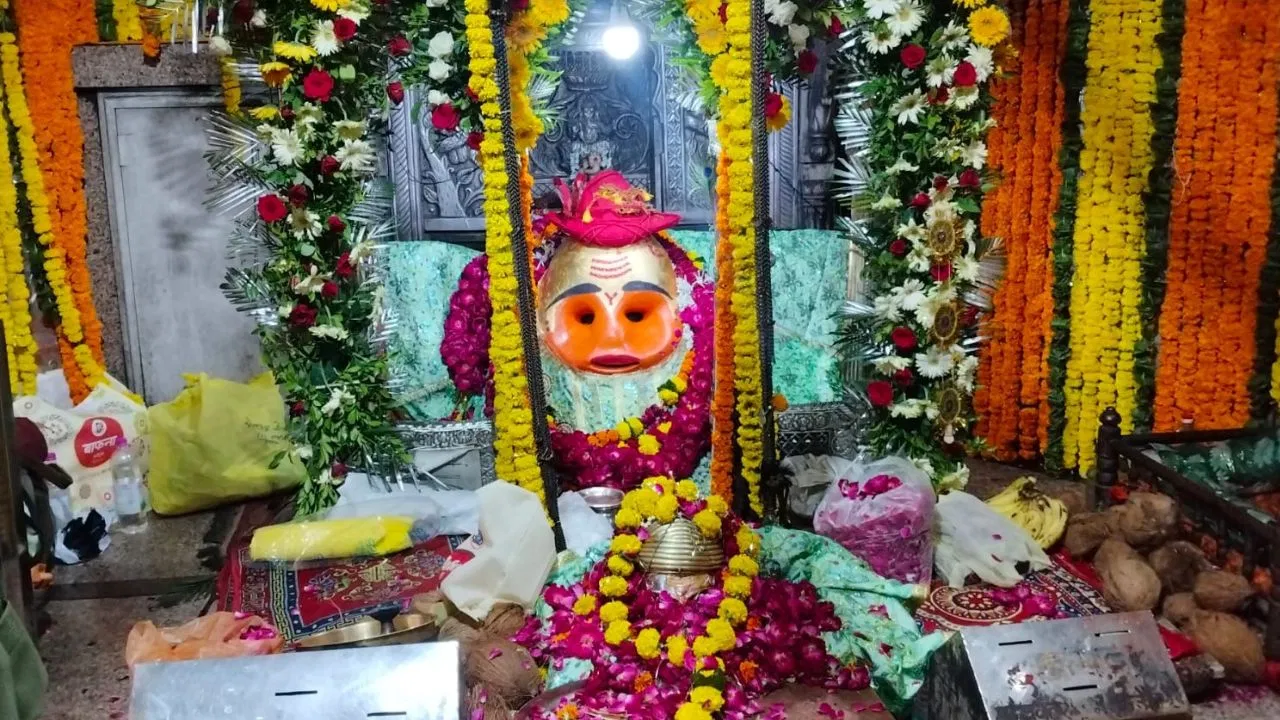
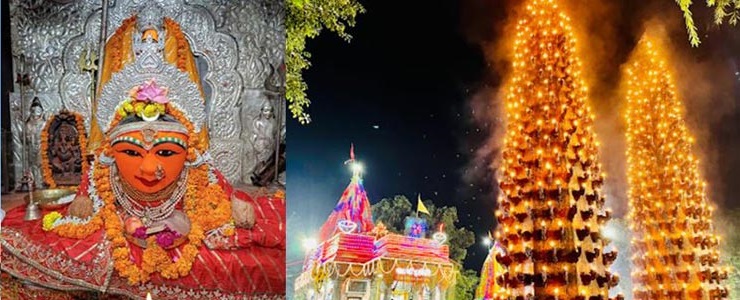
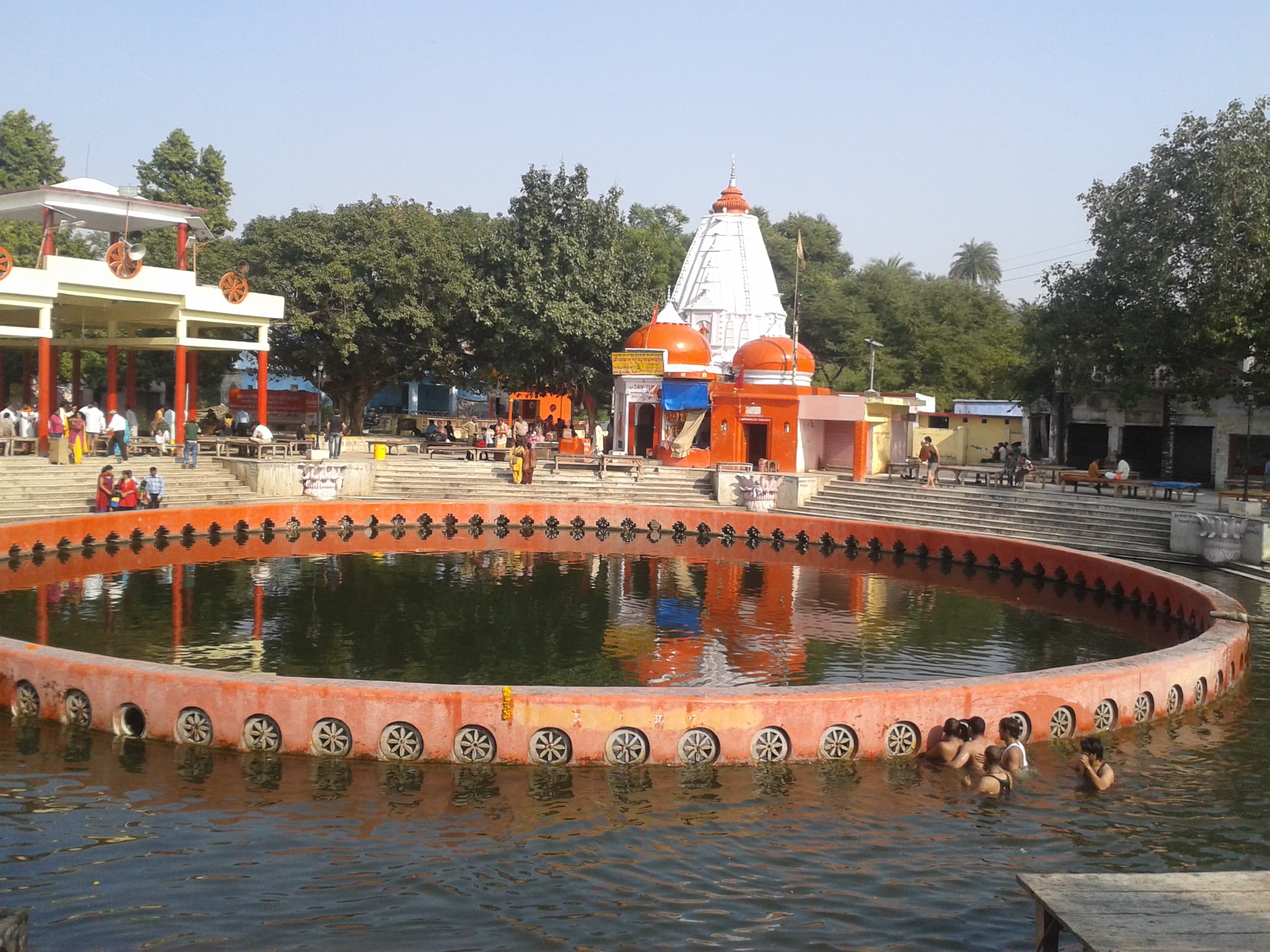
Mangalnath temple, Ujjain
The Bhasma Aarti: The World's Most Powerful Morning Ritual
The Bhasma Aarti at Mahakaleshwar is unique in all of Hindu ritual practice. Performed at approximately 4 AM every single morning, it involves the adorning of the Shivalinga with fresh ash (bhasma) brought from the cremation grounds of Chakratirth nearby. The ash is applied to the Jyotirlinga by the chief priest in a ritual sequence that includes the chanting of specific Shiva Stotras, the blowing of the shankha, and the waving of multiple-tiered lamps.
The theological basis for using cremation ash is rooted in Shiva's own iconography: Shiva smears himself with bhasma, the final residue of the cremated body, as a declaration that he is beyond the cycles of birth and death — that he stands where all forms end and consciousness alone remains. The application of this ash to the Jyotirlinga at dawn, before the sun rises, before the world wakes, carries an atmosphere of raw, primordial spirituality that is completely distinct from any other temple ritual in India.
Witnessing the Bhasma Aarti requires advance online registration through the Mahakaleshwar Temple Trust portal. Spots fill weeks in advance during peak pilgrimage seasons. The experience of standing in the dimly lit sanctum at 4 AM as the priest applies ash to the glowing black stone, with the sound of conch shells reverberating off silver walls, is universally reported by pilgrims as one of the most transformative spiritual experiences of their lives.
✦நடைமுறை குறிப்புகள்
- ›Bhasma Aarti registration opens online 30 days in advance. Book immediately when the window opens — spots fill within hours during major festival periods.
- ›Arrive at the temple by 3 AM. The queues form early and the procession into the sanctum begins before 4 AM.
- ›Photography inside the Bhasma Aarti sanctum is not permitted. Be present fully.
- ›After the Bhasma Aarti, a walk along the Kshipra riverbank at dawn is the perfect complement — the city in that hour is utterly still and beautiful.
Kal Bhairav, Harsiddhi & Sandipani Ashram
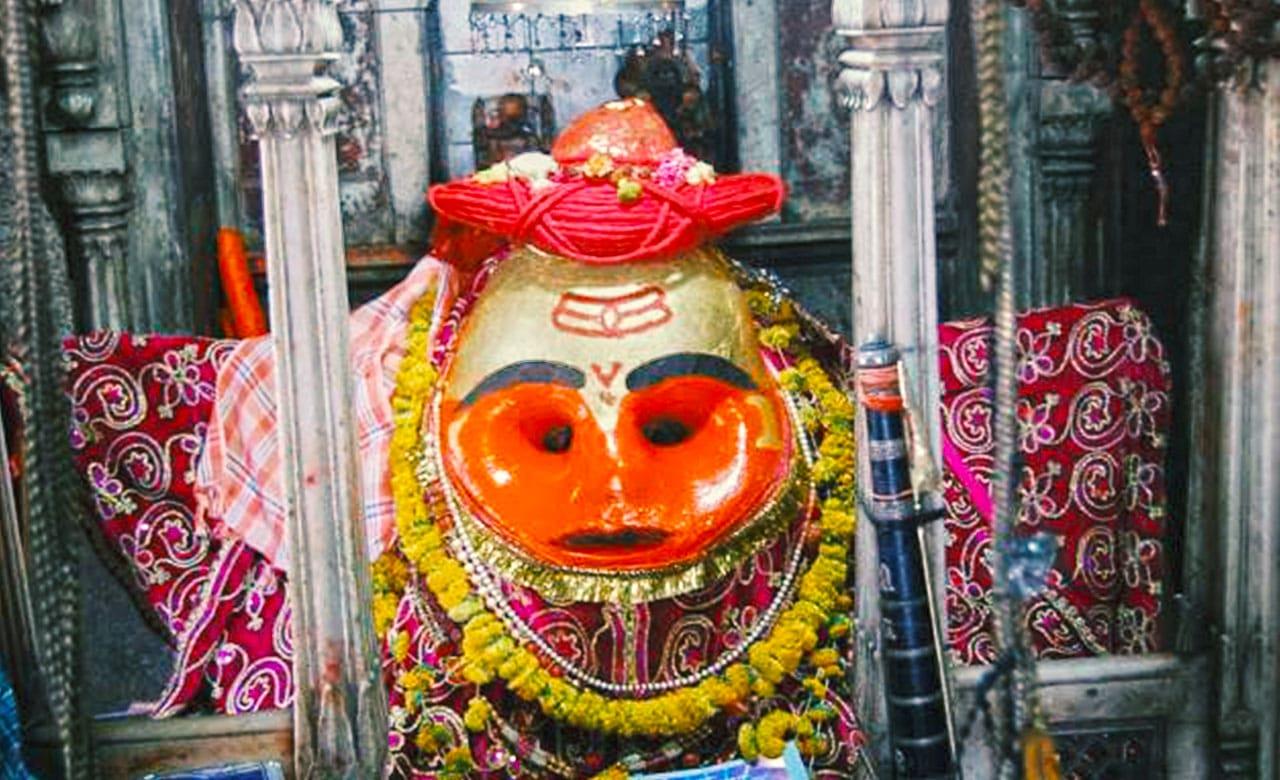
Kal Bhairav temple is one of the most unusual temple experiences in all of India. Bhairav — a fierce form of Shiva — is worshipped here with offerings of madirasur (liquor), which is poured into the mouth of the stone idol and apparently absorbed entirely. This practice, sanctified by centuries of tradition, draws both devotees and the curious, and the temple's atmosphere — slightly outside conventional spiritual comfort zones — is itself a teaching about the many faces of the divine.
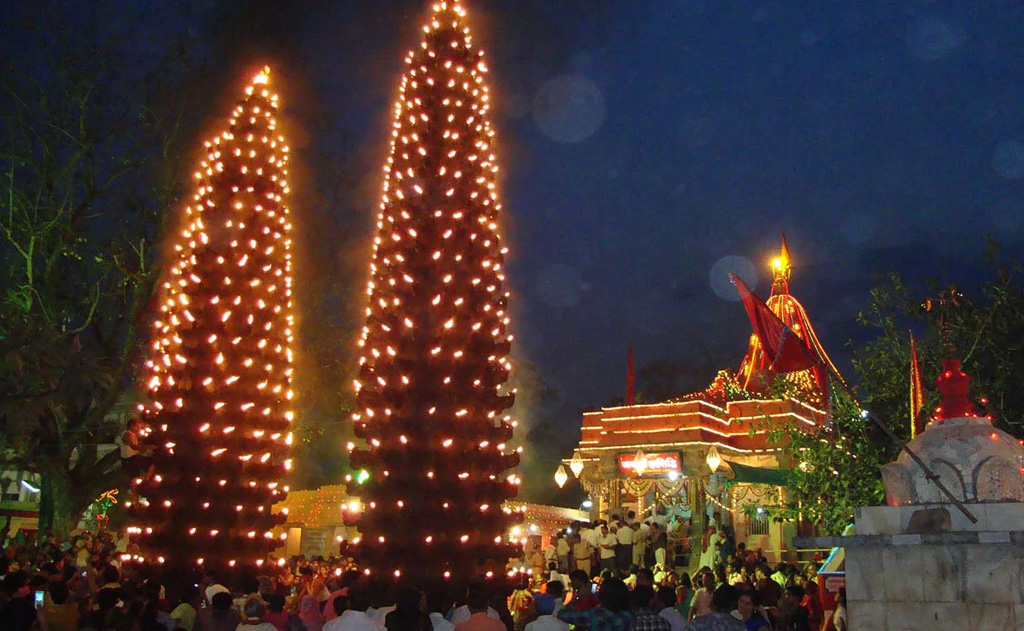
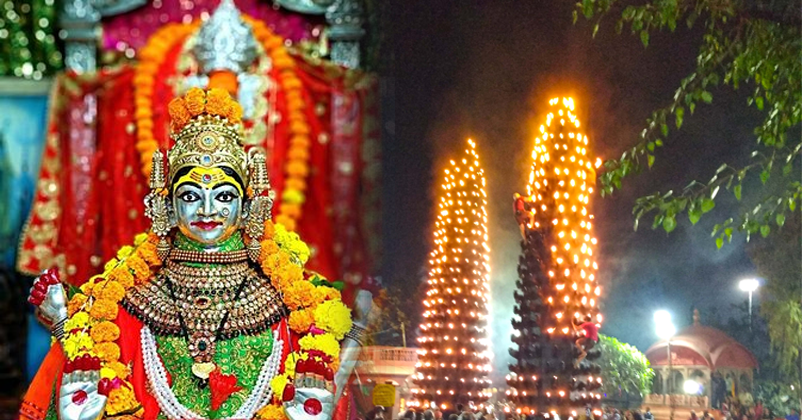
The Harsiddhi Mata temple is one of the 51 Shakti Peethas, marking the spot where Sati's elbow fell. The temple is particularly famous for its two massive oil-lamp towers (diyas) that are lit during Navratri — when hundreds of flames burning on tall metal columns create a spectacle of light that illuminates the entire surrounding area. The Harsiddhi Mata is considered the protector deity of Ujjain and is worshipped before all major undertakings by the city's residents.
Sandipani Ashram is a site of immense educational and spiritual significance: it is here that Lord Krishna, along with Balarama and their friend Sudama, spent twelve years studying under the sage Sandipani. The small ashram, still maintained as a place of learning and meditation, contains the stone slab on which the young Krishna is said to have studied — a tangible point of contact with a Puranic narrative. An ancient water tank (Gomti Kund) on the ashram premises is where Sandipani, upon completing Krishna's education, asked only that his deceased son be returned to him — and Krishna dove into the ocean and retrieved him.
The Kshipra River & the Simhastha Kumbh
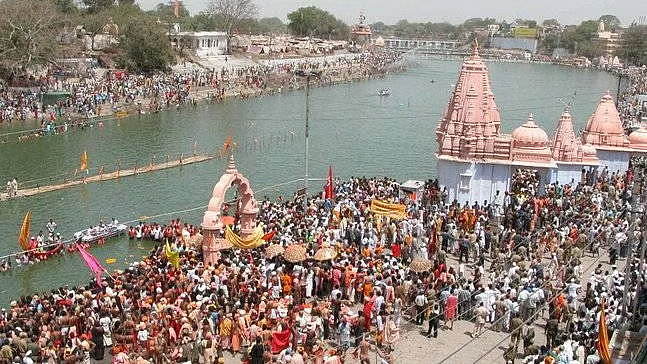
The Kshipra (or Shipra) river is Ujjain's sacred lifeline and the site of the Simhastha Kumbh Mela, held when Jupiter enters the zodiac sign of Leo (Simha). The next Simhastha Kumbh is scheduled for 2028. The Ram Ghat on the Kshipra is where the evening Kshipra Aarti is performed daily — a smaller but deeply moving ritual that echoes the Ganga Aarti of Varanasi. At Ram Ghat, the Kshipra, with its clear waters and stone banks, takes on the quality of a mirror in which the sky and the surrounding temples are perfectly reflected.
During the Simhastha Kumbh, Ujjain receives between 30 and 50 million pilgrims over a 30-day period. The various Shahi Snans — auspicious bathing dates determined by planetary positions — draw the largest concentrations, when lakhs of sadhus from the various Akharas arrive in grand procession to bathe in the Kshipra. For a pilgrimage-oriented traveller, the Simhastha Kumbh is a once-in-twelve-years opportunity to witness Hinduism's most ancient traditions in their most public and comprehensive form.
Best Time to Visit & Travel Information
October through March is the ideal season for Ujjain. Mahashivratri (February-March) is the most significant festival when the temple stays open through the night and the city comes alive with processions, bhajans, and the unique spectacle of thousands of sadhus arriving from across India. The festival celebrates Shiva's cosmic dance (Tandava) and the night-long vigil has an atmosphere unlike any other temple festival in India.
Ujjain is connected to Indore (55 km) which has the nearest major airport, with frequent flights from Delhi, Mumbai, and other cities. Ujjain Junction is a major railway station with direct trains to Delhi, Mumbai, Bhopal, and Indore. From Indore, shared taxis and buses run to Ujjain throughout the day. Omkareshwar (77 km) and Maheshwar (130 km) are natural companion pilgrimages, forming the Madhya Pradesh spiritual triangle.