The Island That Forms the Sacred Syllable
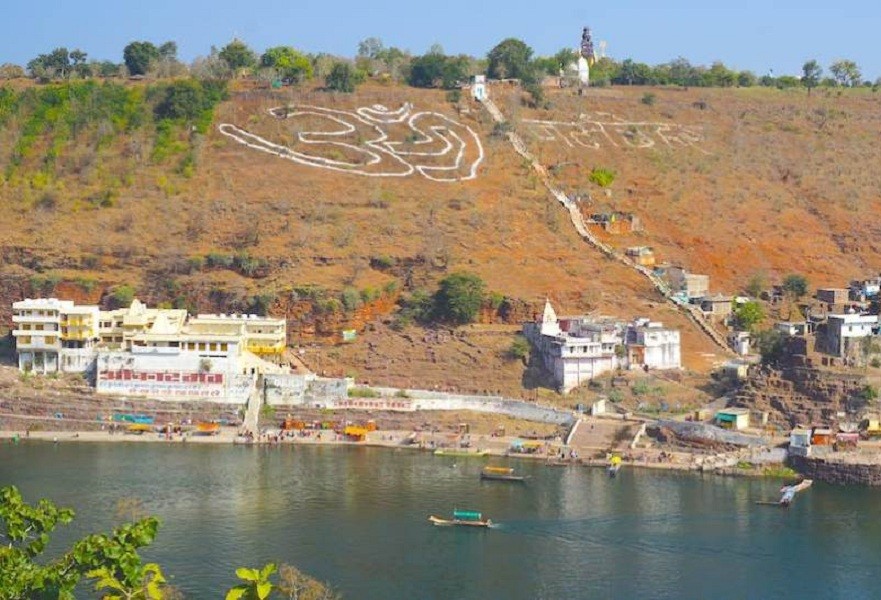
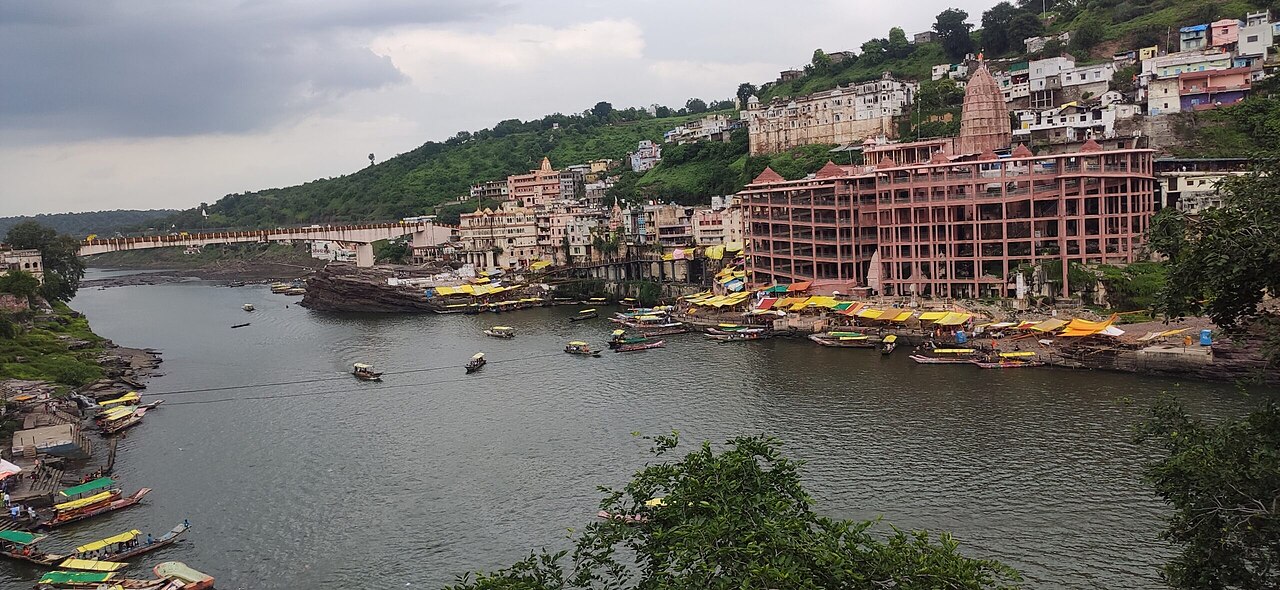
At Omkareshwar, the Narmada river divides around the rocky outcrop of Mandhata island before reuniting downstream, and when viewed from above, this bifurcation creates the shape of the sacred syllable OM (ॐ) — the primordial sound of creation that precedes and contains all other sounds. This geographical miracle, recognised and documented since ancient times, is the reason this place was considered Shiva's chosen residence long before any temple was built here.
The Skanda Purana describes Omkareshwar as the place where Brahma and Vishnu, having resolved their dispute about supremacy before the Jyotirlinga, first chanted OM together in gratitude to Shiva. The sound of that chanting, it says, entered the island and became its permanent vibration — which is why the island is called Omkareshwar, meaning 'the lord who is OM itself' or 'the lord who dwells in OM.'
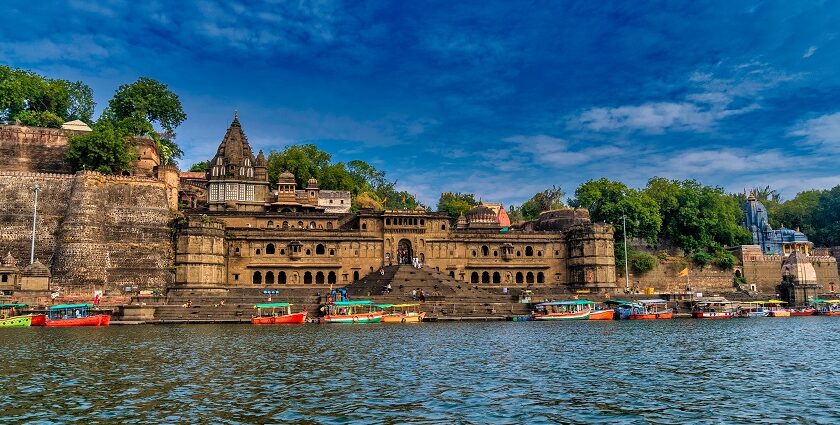
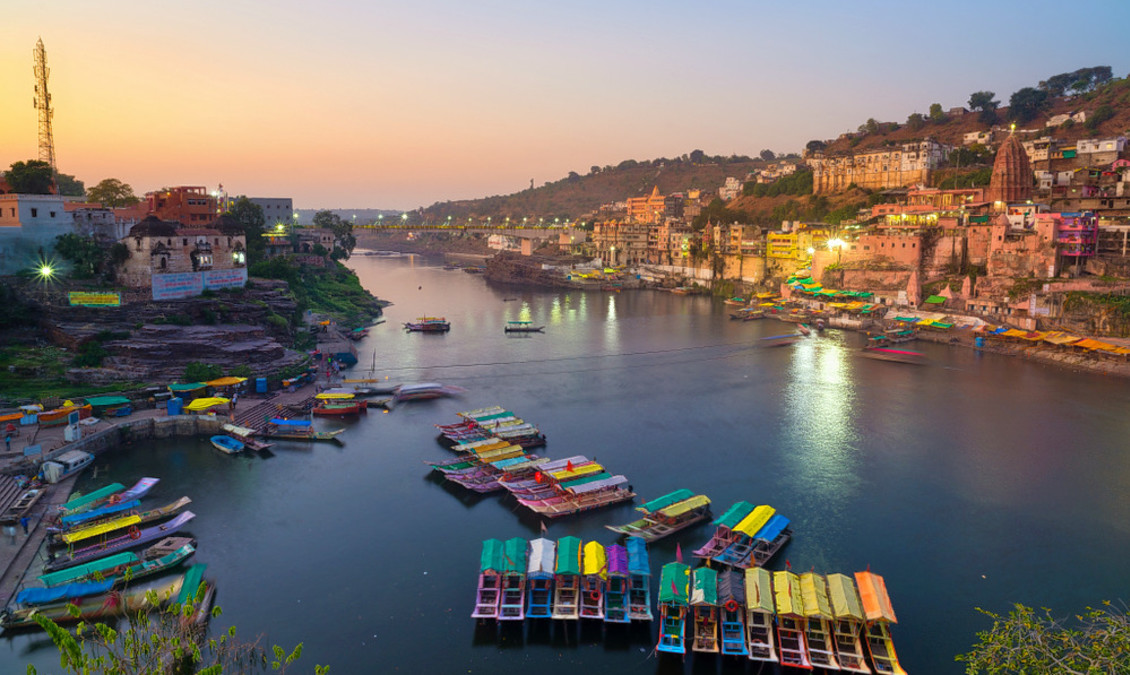
For any pilgrim who arrives by boat from the south bank of the Narmada and approaches the island through the gorge, the first sight of the temple spires rising from the rocky island against the blue sky and the green river is one of the most visually arresting moments in Indian pilgrimage experience. Omkareshwar is not a large or complex site — it is compact, intimate, and extraordinary in a quiet, deep way.
Two Jyotirlingas in One Place: Omkar and Mamleshwar
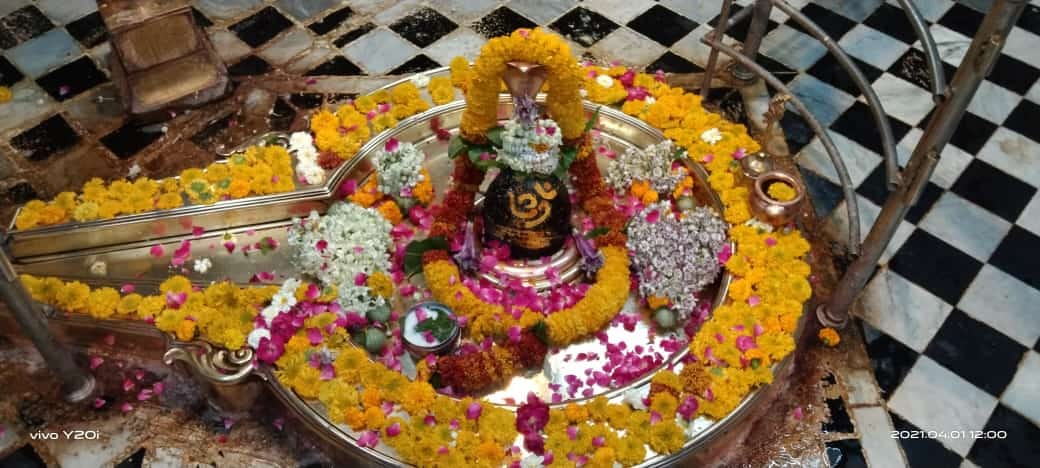
Omkareshwar is unique in all of India: it contains two of the twelve Jyotirlingas within walking distance of each other. The Omkar Mandhata temple on the island houses the principal Jyotirlinga — Omkareshwar. On the south bank of the river, the Mamleshwar (Amaleshwar) temple houses the second Jyotirlinga. Both must be visited for a complete pilgrimage, and many traditions hold that the circuit of both temples — connected by the Narmada boat crossing — constitutes one of the most potent single-day pilgrimages in all of Hinduism.
The Omkar Mandhata temple is a magnificent structure rising in multiple tiers from the island's rocky surface. The inner sanctum, built in the ancient Nagara style, houses the Jyotirlinga in a silver-encased setting. Five aartis are performed daily, and the evening aarti — with the Narmada visible through the temple's open sides as evening light turns the water orange and gold — is one of Omkareshwar's most affecting experiences.
The Mamleshwar temple on the south bank is smaller and less architecturally grand but equally sacred by scriptural testimony. The story behind having two Jyotirlingas here relates to a grant made by Shiva himself: when the sage Narada praised Shiva with the Panchakshari mantra (Na-Ma-Shi-Va-Ya) at this spot, Shiva divided himself into two forms — one to reside on the island (Omkareshwar) and one to remain on the bank (Mamleshwar) — so that devotees who could not cross the river on certain days would still have access to the Jyotirlinga.
புனித காட்சிகள்
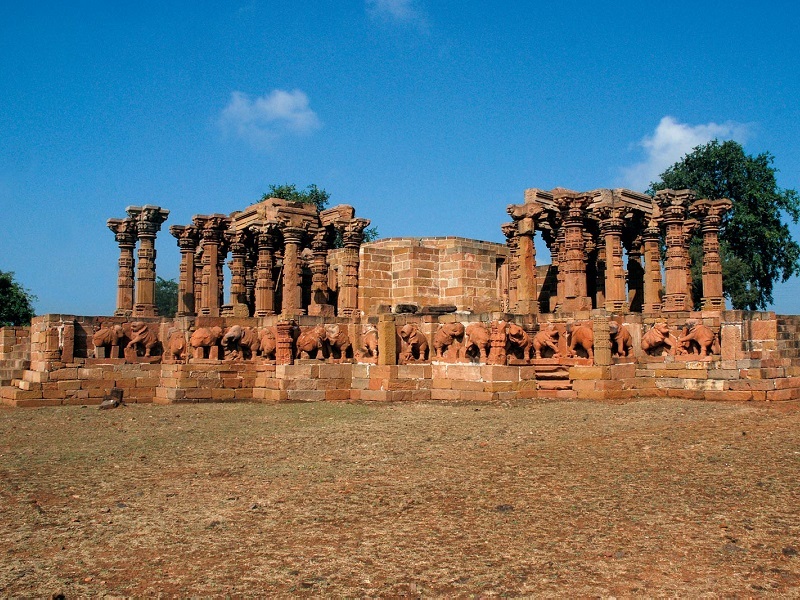
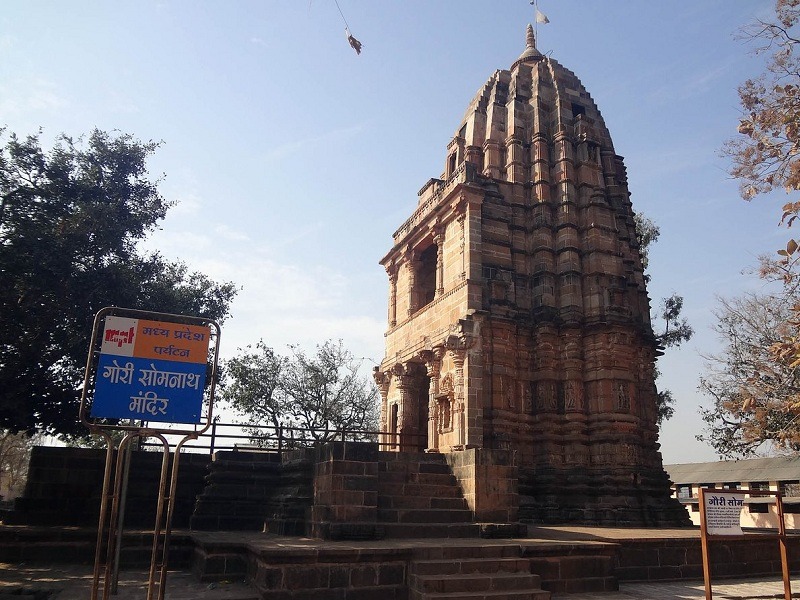
Parikrama, Omkareshwar
Adi Shankaracharya: Omkareshwar's Most Profound Pilgrim
Of all the pilgrims who have come to Omkareshwar across the centuries, none has left a more lasting imprint than Adi Shankaracharya — the 8th-century philosopher, saint, and reformer who synthesised the diverse streams of Hinduism into the philosophy of Advaita Vedanta (non-dual consciousness). Shankara came to Omkareshwar as a young man, searching for a guru. Here, on the banks of the Narmada, he encountered the sage Govindapada meditating in a cave.
Govindapada, recognising the exceptional intellect and spiritual readiness of the young Shankara, accepted him as a disciple and initiated him into the deepest teachings of Vedanta. The cave where Govindapada meditated — and where Shankara received his initiation — is preserved on the island of Mandhata. It is a small, dark, cool cave cut into the rock face, and the atmosphere inside it carries the particular quality of silence associated with deep, long-sustained meditation.
It was also at Omkareshwar, under Govindapada's guidance, that Shankara wrote some of his earliest philosophical commentaries. His Dakshinamurti Stotra, a hymn to Shiva as the silent teacher who transmits knowledge through silence, is said to have been composed here in contemplation of the Narmada's flow. For anyone interested in Indian philosophy, a visit to Omkareshwar is a pilgrimage to the birthplace of India's most rigorous intellectual and spiritual tradition.
The Narmada Parikrama: A 3,800 km Walking Pilgrimage
The Narmada Parikrama is one of the most extraordinary spiritual undertakings available to any person in the 21st century: a walking pilgrimage that circumambulates the entire Narmada river from its source at Amarkantak to the sea at Bharuch and back, covering approximately 3,800 kilometres entirely on foot, sleeping under trees and eating only what is offered, taking no money. It is typically completed in eighteen months to three years.
Omkareshwar is one of the most important waypoints on the Narmada Parikrama. Parikramavasis (those undertaking the parikrama) stop here for extended periods, bathing in the Narmada daily, seeking darshan at both Jyotirlingas, and resting in the dharmashalas near the temples. Meeting a parikramavasi at Omkareshwar — lean, sun-darkened, walking with a staff, their eyes carrying a quality of equanimity that is impossible to manufacture — is one of the most genuinely inspiring encounters available to a short-stay pilgrim.
Even for those who cannot undertake the full parikrama, a ritual dip in the Narmada at Omkareshwar and a circumambulation (parikrama) of the Mandhata island on foot — a walk of approximately three kilometres along the island's perimeter — is a meaningful and deeply calming experience. The perimeter walk passes through the island's temple complex, along rock paths with views of the river on both sides, and through groves of trees where monkeys move through branches overhead.
Best Time to Visit & How to Combine with Maheshwar
Omkareshwar is best visited between October and March. Mahashivratri is the largest festival, when pilgrims arrive from across Madhya Pradesh and the island becomes dense with devotion. The monsoon season (July-September) swells the Narmada to an impressive size but can make the boat crossing to the island rougher than usual.
Omkareshwar and Maheshwar, 60 km apart, form a natural two-destination pilgrimage pair. Many pilgrims combine both in a two-day circuit from Indore (77 km from Omkareshwar, 90 km from Maheshwar). Ujjain (132 km from Omkareshwar) adds a third Jyotirlinga to create a complete Madhya Pradesh spiritual circuit. All three can be covered in three to four days from Indore, which is the most practical base for the region.
✦நடைமுறை குறிப்புகள்
- ›The boat crossing to Mandhata island takes 10-15 minutes. Boats run from early morning until late evening.
- ›The 68 sacred sites (tirthas) on the Mandhata island form their own parikrama circuit — a local priest can guide you through all of them in 2-3 hours.
- ›Accommodation on the island is basic but available in dharmashalas. Staying overnight allows access to the 4 AM Mangala Aarti.
- ›The best views of the OM-shaped island are from the Omkareshwar Dam viewpoint, a 5-minute drive from the main ghat.