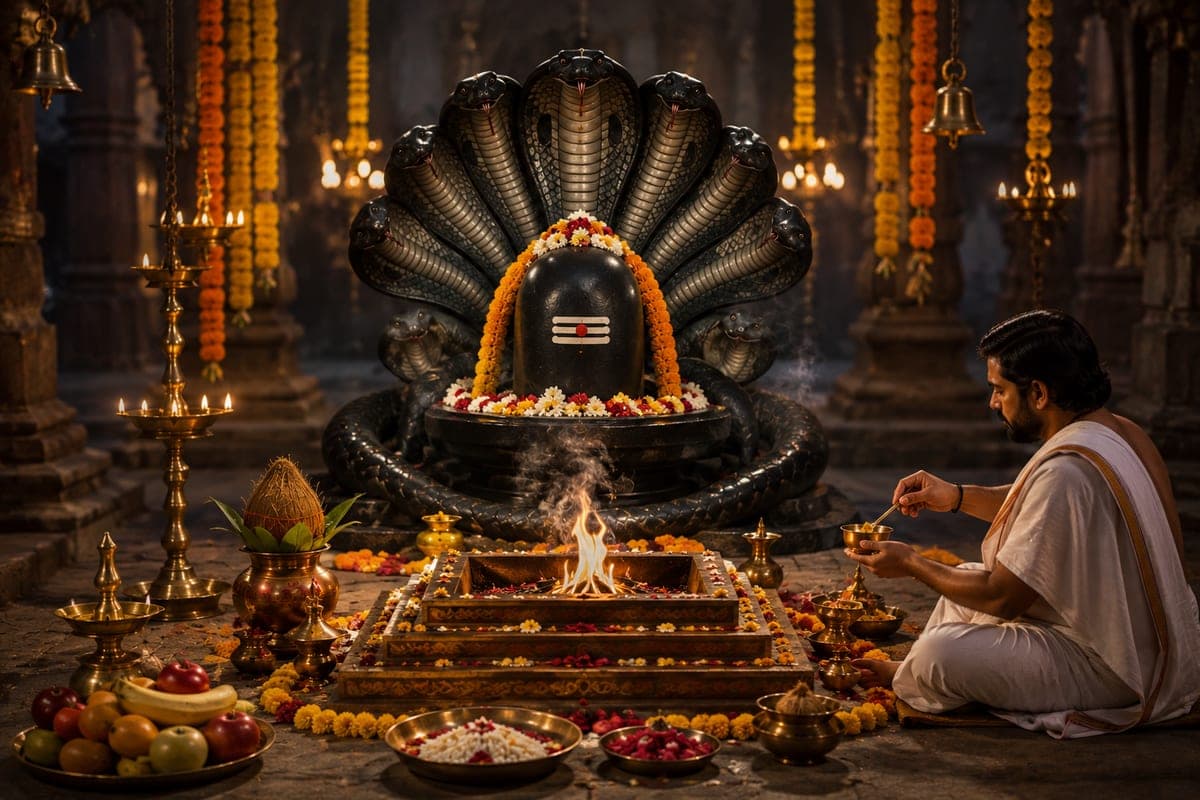
Many Hindu ceremonies conclude with Shanti Path, a peace invocation recited to seek wellbeing and harmony beyond the immediate ritual itself. Pilgrims attending a puja or havan during their Yatra will often hear this closing recitation before the ceremony formally ends.
What Is Shanti Path?
Shanti Path is a peace invocation, typically drawn from Vedic sources, recited at the conclusion of a ritual or ceremony, seeking peace for the individual, the community, and the wider world, often repeating the word 'shanti' three times for emphasis. Priests performing Shanti Path are generally willing to briefly explain the ritual to curious pilgrims, particularly at quieter, less crowded temples.
Why Shanti Path Is Recited
This closing recitation reflects a broader intention behind Hindu ritual practice, extending the benefit of the ceremony beyond personal gain to include peace and wellbeing for others, reinforcing a communal and universal outlook. Many pilgrims specifically arrange Shanti Path during their Yatra to mark a personal intention, vow, or family occasion.
Shanti Path During Pilgrimage Rituals
Pilgrims sponsoring a puja or havan during their Yatra will typically hear Shanti Path recited by the priest as the ceremony concludes, marking a formal and peaceful close to the ritual before prasad is distributed. The exact steps involved in Shanti Path can vary somewhat between temples, though the underlying devotional purpose remains broadly consistent across India.