Building on the practice of kirtan, sankirtan specifically emphasises large-scale, congregational chanting performed collectively rather than by a smaller group. Understanding this distinction helps pilgrims appreciate the particularly public and communal devotional gatherings sometimes encountered during their Yatra.
What Is Sankirtan?
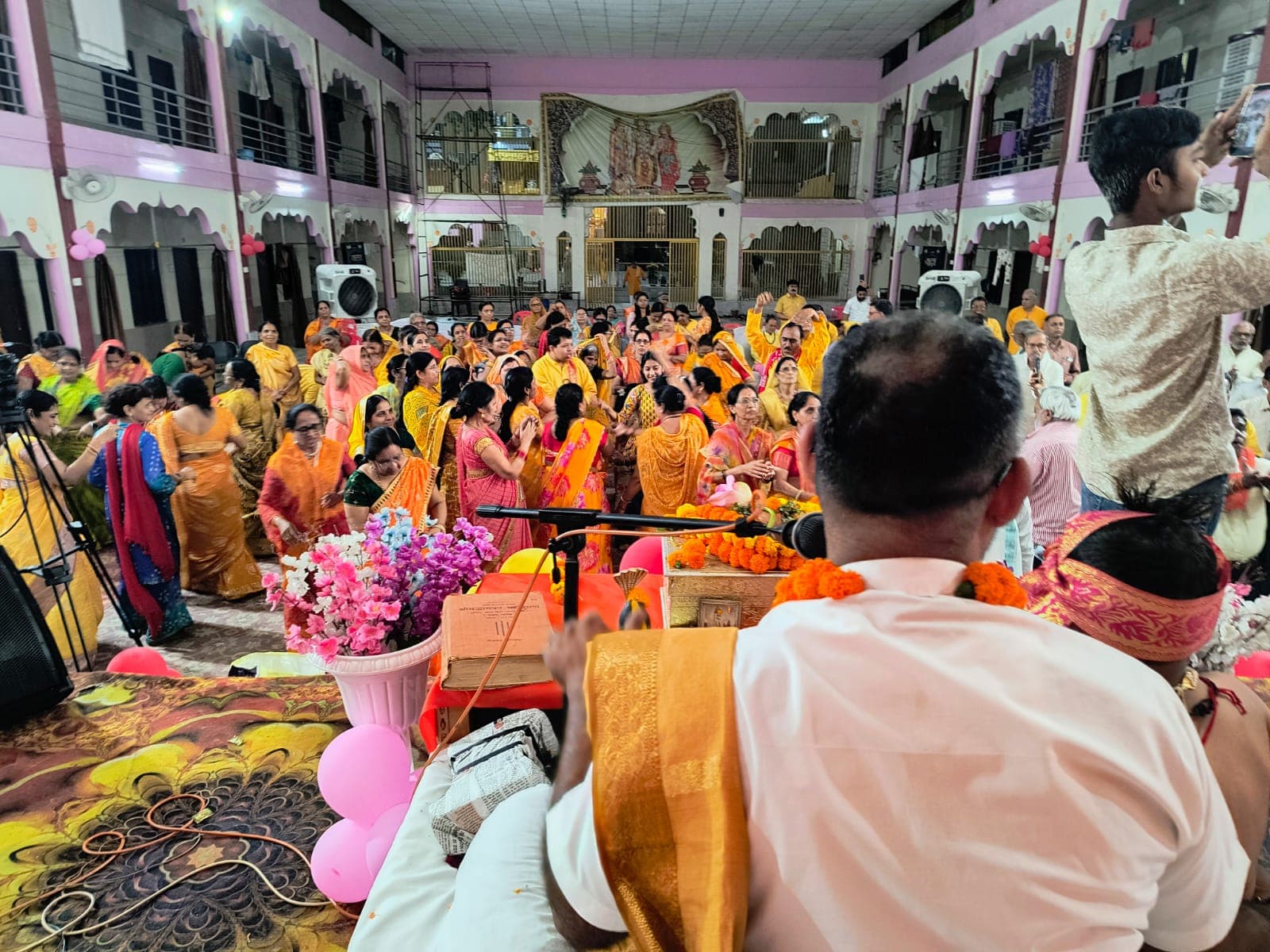
Sankirtan refers to congregational devotional chanting, typically performed by a large group in a public setting, closely related to kirtan but emphasising collective, widespread participation rather than smaller, more intimate gatherings. The exact steps involved in Sankirtan can vary somewhat between temples, though the underlying devotional purpose remains broadly consistent across India.
Sankirtan in Bhakti Tradition
This form of collective chanting holds particular historical importance within the Bhakti movement, especially traditions associated with Chaitanya Mahaprabhu, who is credited with popularising public sankirtan as an accessible form of devotion. Priests performing Sankirtan are generally willing to briefly explain the ritual to curious pilgrims, particularly at quieter, less crowded temples.
Sankirtan During Festivals and Processions
Pilgrims attending major festivals or a Shobha Yatra procession may witness large-scale sankirtan, with entire crowds joining together in chanting, creating a particularly powerful collective devotional atmosphere during the celebration. Many pilgrims specifically arrange Sankirtan during their Yatra to mark a personal intention, vow, or family occasion.