Anyone visiting a Shiva temple in India will almost certainly hear the chant of Om Namah Shivaya echoing through the sanctum. This simple yet powerful mantra, dedicated to Lord Shiva, is central to Shaivite worship and is recited constantly by pilgrims during darshan, abhishek, and Jyotirlinga Yatras across the country, forming a kind of devotional soundtrack to much of Shiva-centred pilgrimage travel.
What Does Om Namah Shivaya Mean?
Om Namah Shivaya is a Sanskrit mantra that translates roughly to 'I bow to Shiva', expressing surrender and devotion to the deity. Composed of five core syllables representing the elements of earth, water, fire, air, and space in some interpretations, it is considered one of the most powerful and widely used mantras in Shaivite tradition, chanted by beginners and advanced practitioners alike. Many devotees first encounter Om Namah Shivaya through family elders or school textbooks long before fully appreciating its deeper significance during an actual pilgrimage visit.
Significance in Shiva Worship
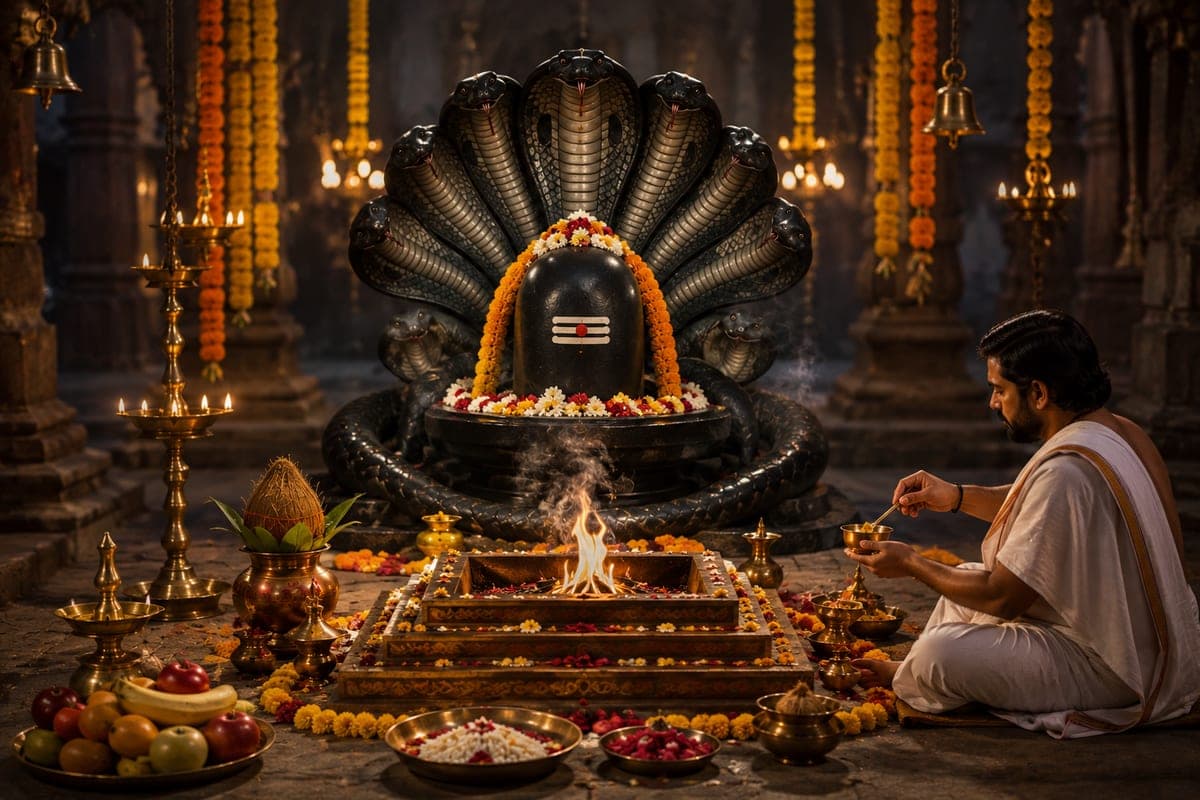
This mantra is chanted during nearly every form of Shiva worship, from personal daily prayer to elaborate temple rituals such as abhishek performed on Shivlingas. Its repetitive, rhythmic structure makes it easy for devotees of all backgrounds to chant, whether individually or in large group settings during temple aarti, and many devotees describe a calming, meditative effect from repeated recitation over time. Regional interpretations of Om Namah Shivaya can vary somewhat across India, though the core religious significance generally remains recognisable across different linguistic and cultural communities.
Chanting During Jyotirlinga Pilgrimage
Pilgrims undertaking a Yatra to the twelve Jyotirlinga temples frequently chant Om Namah Shivaya throughout their journey, both during travel and while queuing for darshan at each site. The mantra's association with Shiva makes it a natural companion for any pilgrimage focused on this deity, reinforcing devotion at each stage of a multi-temple Yatra that can sometimes span several states and multiple separate trips over the years. Scholars and religious teachers continue to write and lecture extensively on Om Namah Shivaya, reflecting its lasting relevance within contemporary Hindu religious life and study.