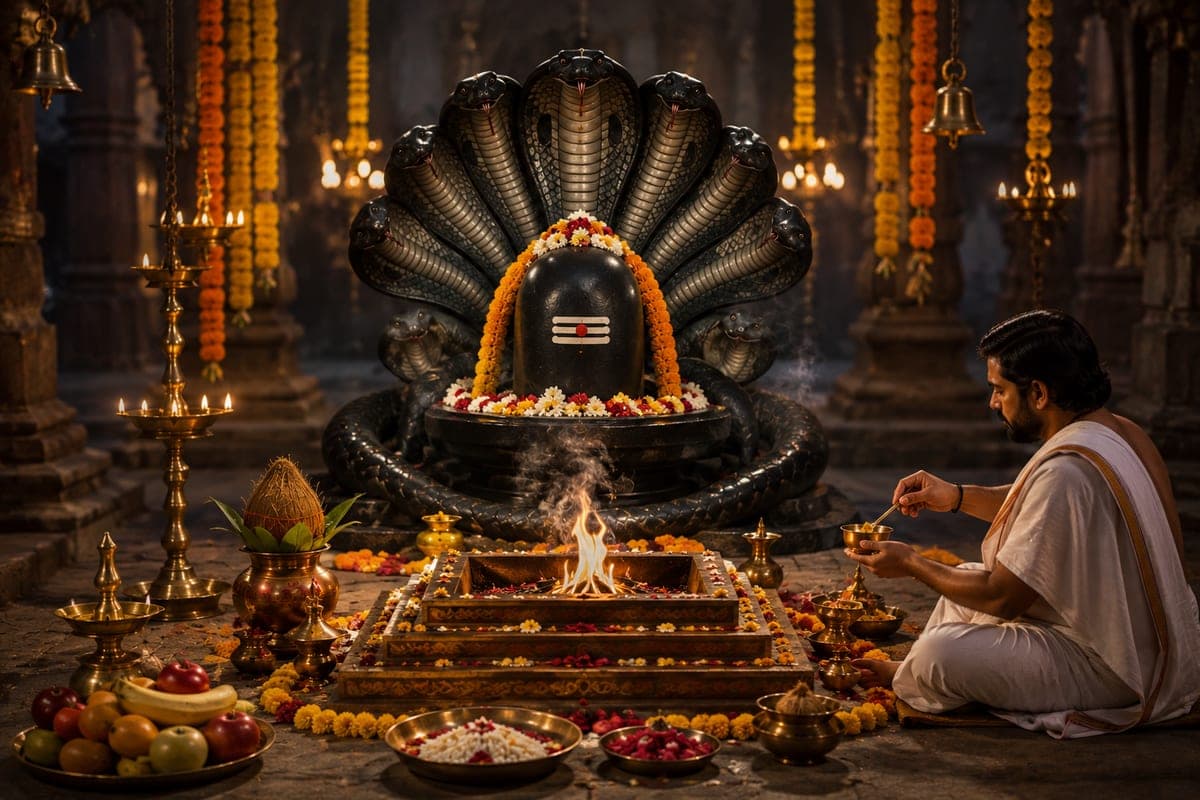
Scaling up considerably from Laghu Rudra, the Maha Rudra ceremony involves extensive Vedic recitation performed by numerous priests, often over several days. Understanding this larger ritual helps pilgrims appreciate the more elaborate ceremonies occasionally organised at significant Shiva temples.
What Is Maha Rudra?
Maha Rudra is a large-scale ritual involving extensive, repeated recitation of the Rudram hymn, performed collectively by numerous priests, representing a considerably more elaborate version of the smaller Laghu Rudra ceremony. Many pilgrims specifically arrange Maha Rudra during their Yatra to mark a personal intention, vow, or family occasion.
Maha Rudra Within the Ritual Hierarchy
This ceremony sits above Laghu Rudra in scale and significance, requiring substantially more priests, time, and resources, typically reserved for particularly significant occasions or major temple festivals dedicated to Shiva. The exact steps involved in Maha Rudra can vary somewhat between temples, though the underlying devotional purpose remains broadly consistent across India.
Maha Rudra During Major Festivals
Pilgrims visiting a Shiva temple during a significant occasion may encounter preparations for or participation in a Maha Rudra, considered a particularly powerful collective offering given the scale and dedication required to organise it. Priests performing Maha Rudra are generally willing to briefly explain the ritual to curious pilgrims, particularly at quieter, less crowded temples.