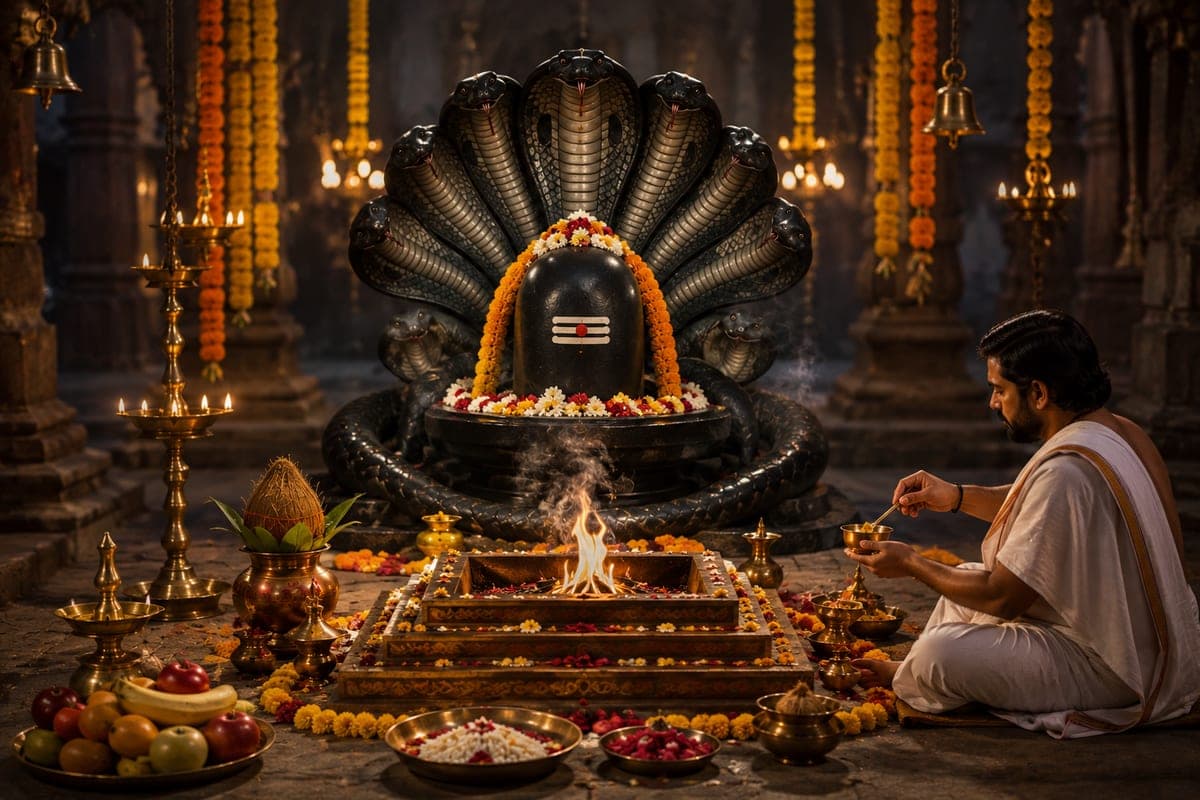
Known as homam in South Indian tradition, this sacred fire ceremony closely parallels the havan performed elsewhere in India, involving offerings placed into a consecrated fire while priests chant specific mantras. Pilgrims visiting South Indian temples often encounter this term used for fire-based rituals.
What Is a Homam?
A homam is a sacred fire ceremony, essentially the South Indian equivalent of havan, in which specific offerings are placed into a consecrated fire while priests chant Vedic mantras, performed to fulfil a specific intention or mark an occasion. Many pilgrims specifically arrange Homam during their Yatra to mark a personal intention, vow, or family occasion.
Homam Versus Havan
While the underlying ritual is largely the same, homam is the term commonly used in South Indian, particularly Tamil and Telugu, temple tradition, whereas havan is more commonly used in North Indian contexts. Priests performing Homam are generally willing to briefly explain the ritual to curious pilgrims, particularly at quieter, less crowded temples.
Sponsoring a Homam During a Yatra
Pilgrims visiting South Indian temples can typically arrange a homam through the temple's priests, providing details for the sankalp before the ceremony, with specific types of homam associated with different intentions or deities. The exact steps involved in Homam can vary somewhat between temples, though the underlying devotional purpose remains broadly consistent across India.