Few rituals are as visually recognisable as the Havan — a fire kept burning at the centre of a puja while offerings are placed into it one by one. Understanding what's actually happening during a Havan makes it easier to follow along, whether you're sponsoring one or simply present as a guest.
What is a Havan?
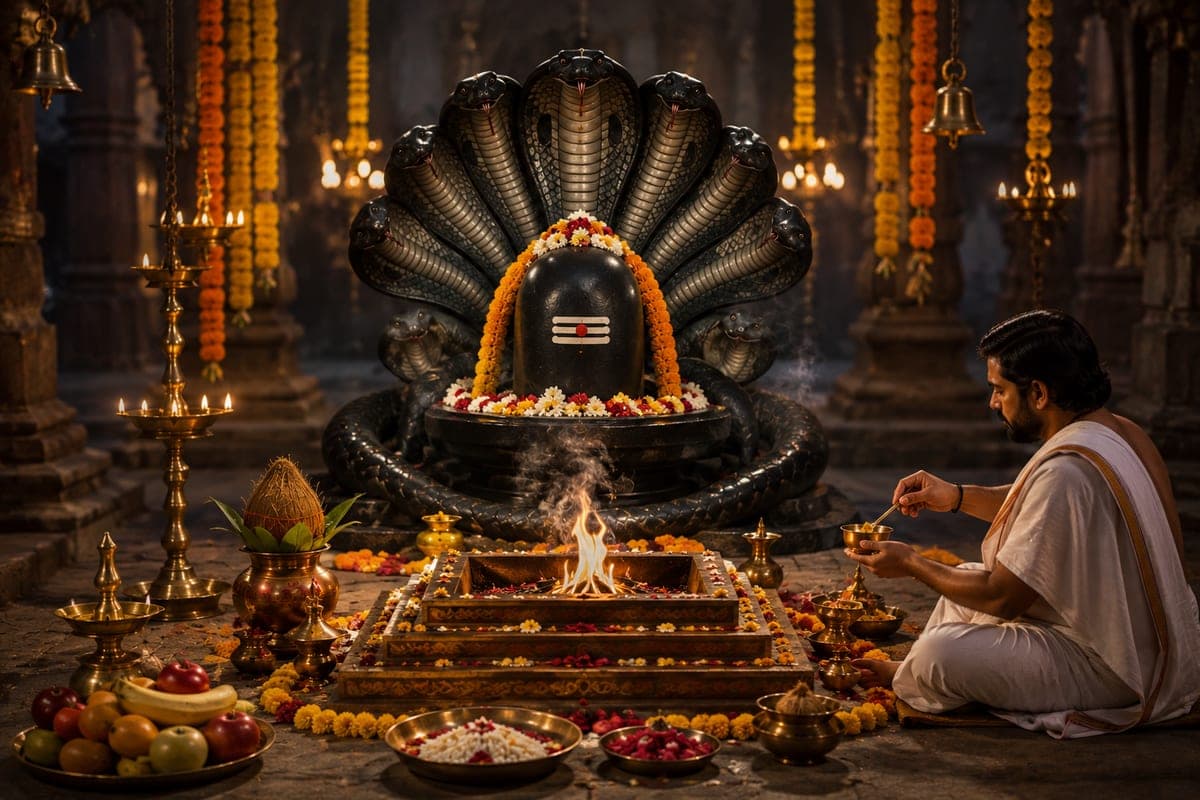
A Havan (also called Yajna or Yagya) is a fire ritual in which offerings — ghee, grains, herbs, and wood — are made into a consecrated fire while Vedic mantras are recited.
Agni, the fire deity, is considered the messenger that carries these offerings to the other devas, making Havan one of the most direct forms of Vedic worship.
When is it performed?
Havans are performed on their own for purification and remedy, or as the closing ritual of a longer puja or Katha — many multi-day rituals at Ujjain, Omkareshwar, and Naimisharanya end with a dedicated Havan.
What to expect during a Havan
A Havan is usually conducted around a small brick or copper fire pit (havan kund), with the presiding pandit guiding participants through each offering — a spoonful of ghee, specific grains, or herbs — timed to a mantra. Devotees seated around the kund are often invited to make some offerings themselves, and the ritual typically ends with aarti once the final offering (purnahuti) is made.