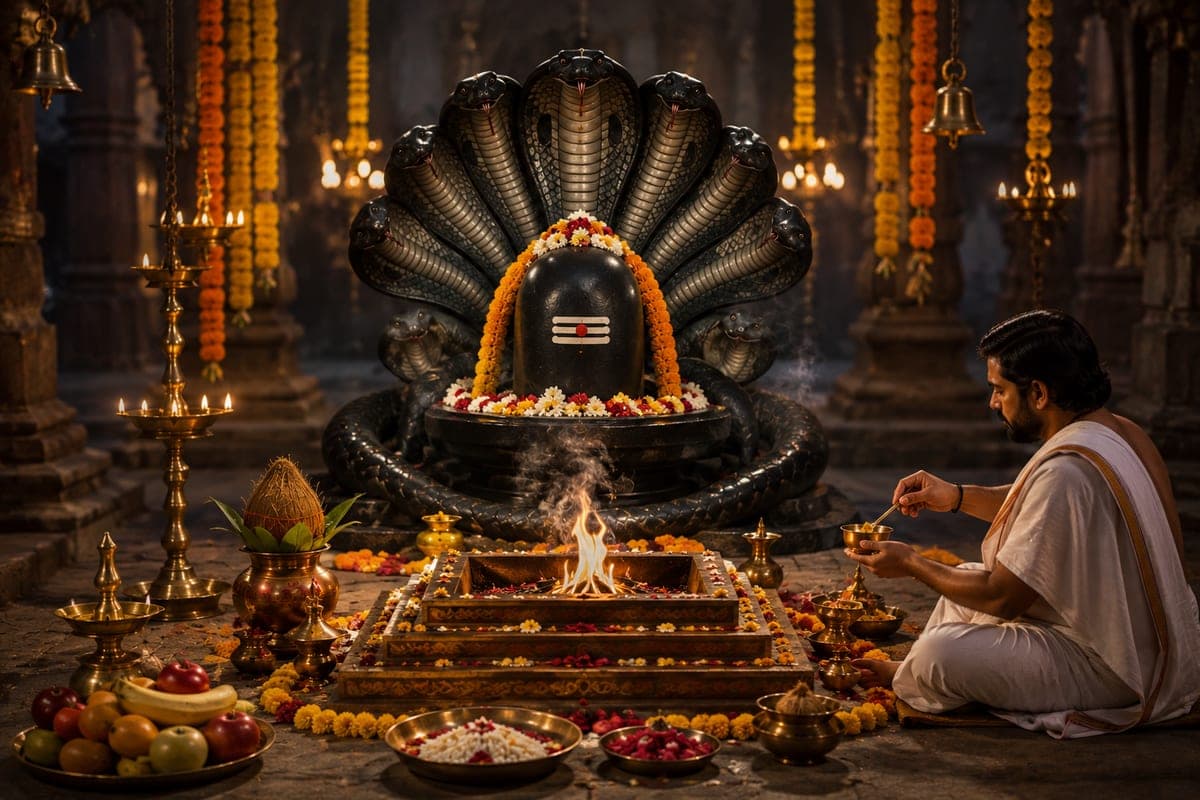
The sight and scent of a havan, a sacred fire ceremony, is one of the more visually striking rituals pilgrims encounter during their Yatra. Understanding this practice helps explain why devotees sponsor this particular ceremony, often for significant personal or family occasions.
What Is a Havan?
A havan, also spelled hawan, is a sacred fire ceremony in which specific offerings, including ghee, grains, and herbs, are placed into a consecrated fire while priests chant Vedic mantras, believed to purify the environment and fulfil the sponsor's intention. Priests performing Havan are generally willing to briefly explain the ritual to curious pilgrims, particularly at quieter, less crowded temples.
Religious Significance of Havan
Fire is considered a sacred medium in Hindu tradition, believed to carry offerings directly to the deities being invoked. A havan is often performed to mark significant occasions, seek blessings, or fulfil a specific vow. The exact steps involved in Havan can vary somewhat between temples, though the underlying devotional purpose remains broadly consistent across India.
Sponsoring a Havan During a Yatra
Pilgrims can typically arrange a havan through a temple's priest, providing details for the sankalp before the ceremony begins, with the ritual's scale and duration varying depending on the specific occasion and intention behind the offering. Many pilgrims specifically arrange Havan during their Yatra to mark a personal intention, vow, or family occasion.