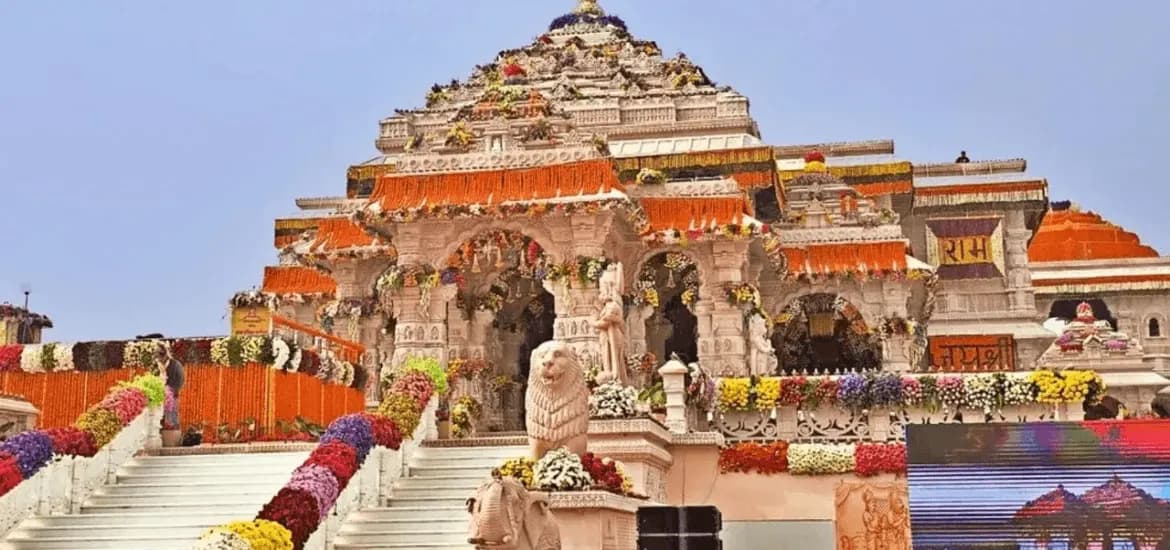
Rising high above the surrounding town, the gopuram announces a temple's presence long before pilgrims reach its entrance. Understanding this distinctive architectural feature, common across South Indian temples, helps travellers appreciate one of the most visually striking elements of their Yatra.
What Is a Gopuram?
A gopuram is a tall, monumental tower marking the entrance to a South Indian temple complex, typically covered in elaborate carvings depicting deities, mythological scenes, and decorative motifs, often brightly painted. Regional variations in Gopuram are common across India, reflecting centuries of distinct local building traditions and craftsmanship.
Architectural Significance of the Gopuram
Larger temple complexes may feature multiple gopurams of varying heights marking different entrances, with the tallest often serving as the primary gateway. This architectural style is particularly associated with Dravidian temple construction found across South India. Pilgrims interested in temple architecture sometimes specifically seek out well-preserved examples connected to Gopuram during their Yatra.
The Gopuram and the Pilgrim Experience
Passing beneath a temple's gopuram is often the first significant moment of a pilgrim's visit, marking the transition from the ordinary world into sacred space, with the tower's scale and detail setting the tone for the darshan experience ahead. Architectural historians and temple guides often point to Gopuram as an example of the careful planning behind traditional Hindu temple design.