The nine-day festival of Navratri formally begins with Ghatasthapana, the ritual installation of a kalash symbolically inviting the goddess's presence. Understanding this opening ceremony helps pilgrims appreciate the structured start to one of Hinduism's most widely celebrated festivals.
What Is Ghatasthapana?
Ghatasthapana refers to the ritual installation of a kalash, typically filled with water and topped with mango leaves and a coconut, performed at the very start of Navratri to formally invite the goddess's presence for the following nine days. Many pilgrims specifically arrange Ghatasthapana during their Yatra to mark a personal intention, vow, or family occasion.
Ghatasthapana at Temples and Homes
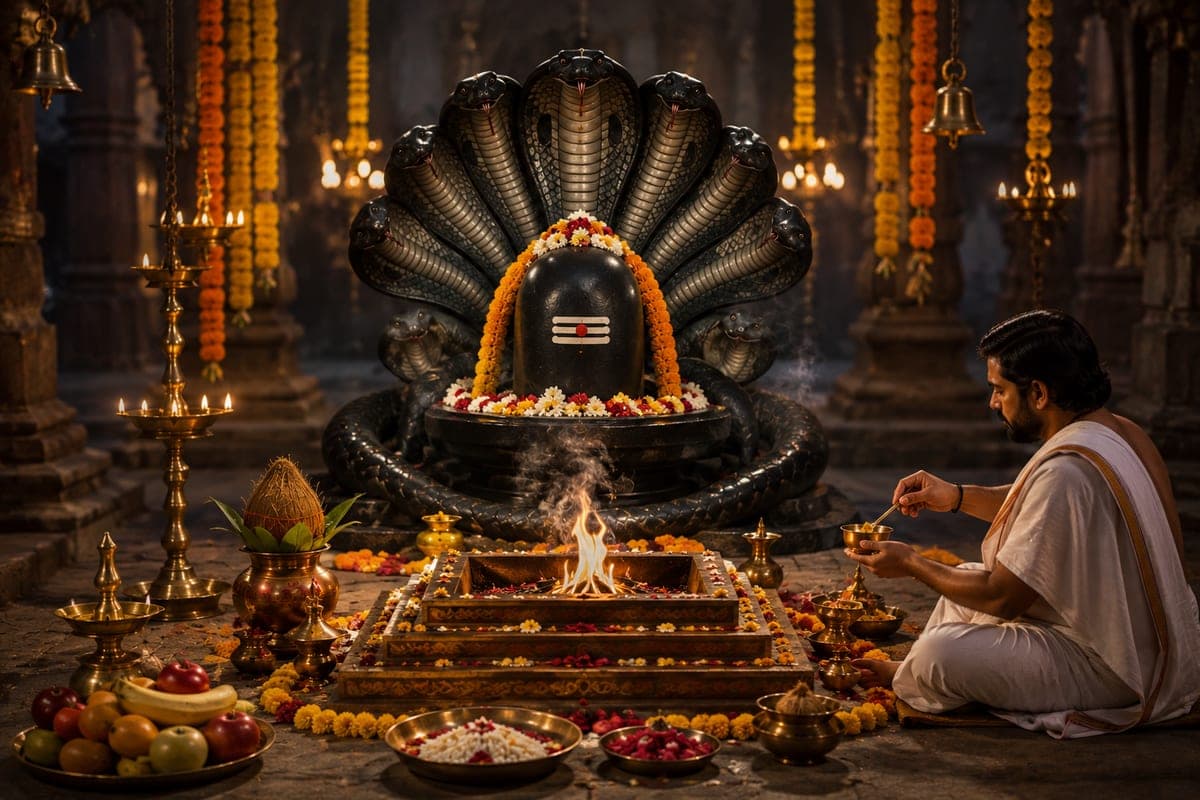
This ceremony is performed both at temples, where it marks the formal beginning of nine days of goddess worship, and within individual homes, where families install their own kalash as part of personal Navratri observance. The exact steps involved in Ghatasthapana can vary somewhat between temples, though the underlying devotional purpose remains broadly consistent across India.
Ghatasthapana and Pilgrimage Timing
Pilgrims planning a Yatra to a major Devi temple around Navratri should be aware that Ghatasthapana marks the start of significantly increased ritual activity and crowds, continuing throughout the nine days of the festival. Priests performing Ghatasthapana are generally willing to briefly explain the ritual to curious pilgrims, particularly at quieter, less crowded temples.