From the moment a pilgrim steps into a temple to quiet moments of personal meditation, chanting forms a near-constant presence throughout a Yatra. Understanding its different forms helps pilgrims appreciate the many contexts in which this rhythmic devotional practice appears.
What Is Chanting in Hindu Worship?
Chanting refers to the rhythmic recitation of mantras, hymns, or a deity's name, performed either individually as a form of personal meditation or collectively during rituals, kirtan, or temple ceremonies. Many pilgrims specifically arrange Chanting during their Yatra to mark a personal intention, vow, or family occasion.
Different Forms of Chanting
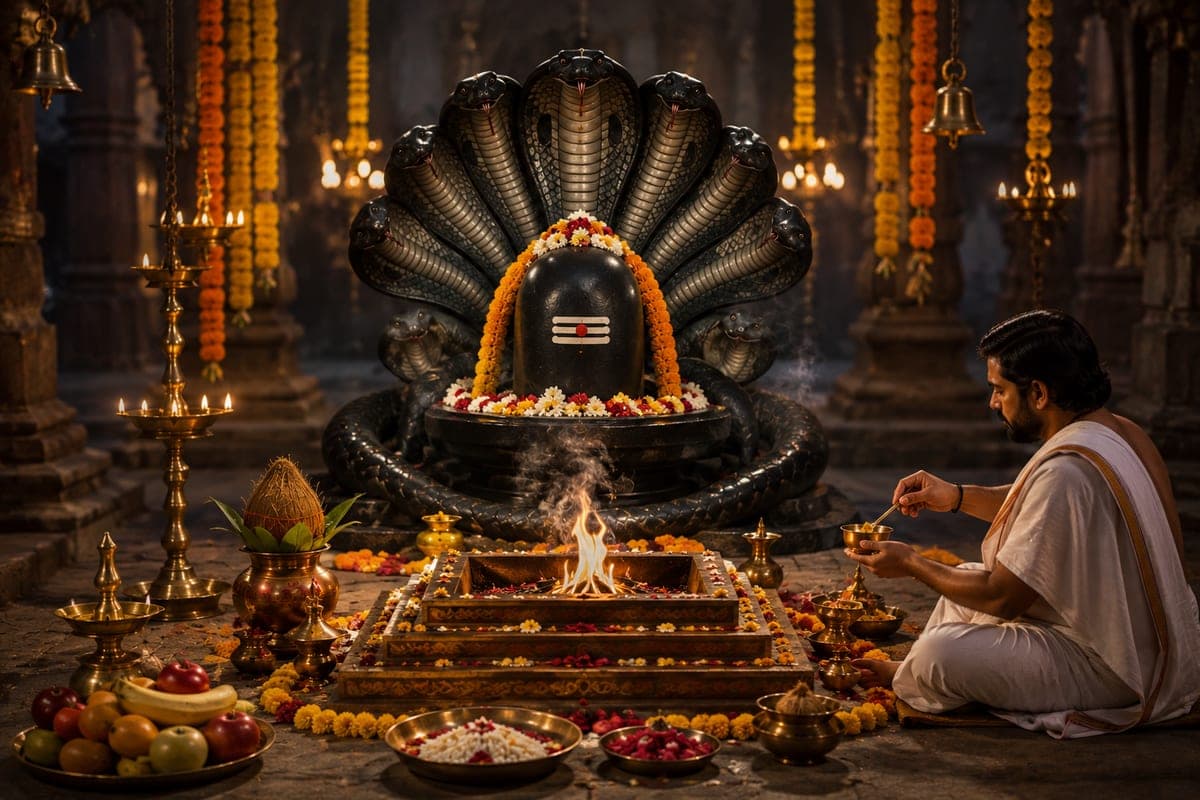
Chanting can range from simple, repetitive phrases like Om Namah Shivaya to elaborate Vedic hymns recited by trained priests, with different forms suited to different contexts, from personal practice to formal temple ritual. Priests performing Chanting are generally willing to briefly explain the ritual to curious pilgrims, particularly at quieter, less crowded temples.
Chanting During a Yatra
Pilgrims encounter chanting throughout nearly every stage of their Yatra, from mantras recited during darshan to group kirtan sessions at ashrams, making it one of the most consistent devotional threads running through the entire pilgrimage experience. The exact steps involved in Chanting can vary somewhat between temples, though the underlying devotional purpose remains broadly consistent across India.