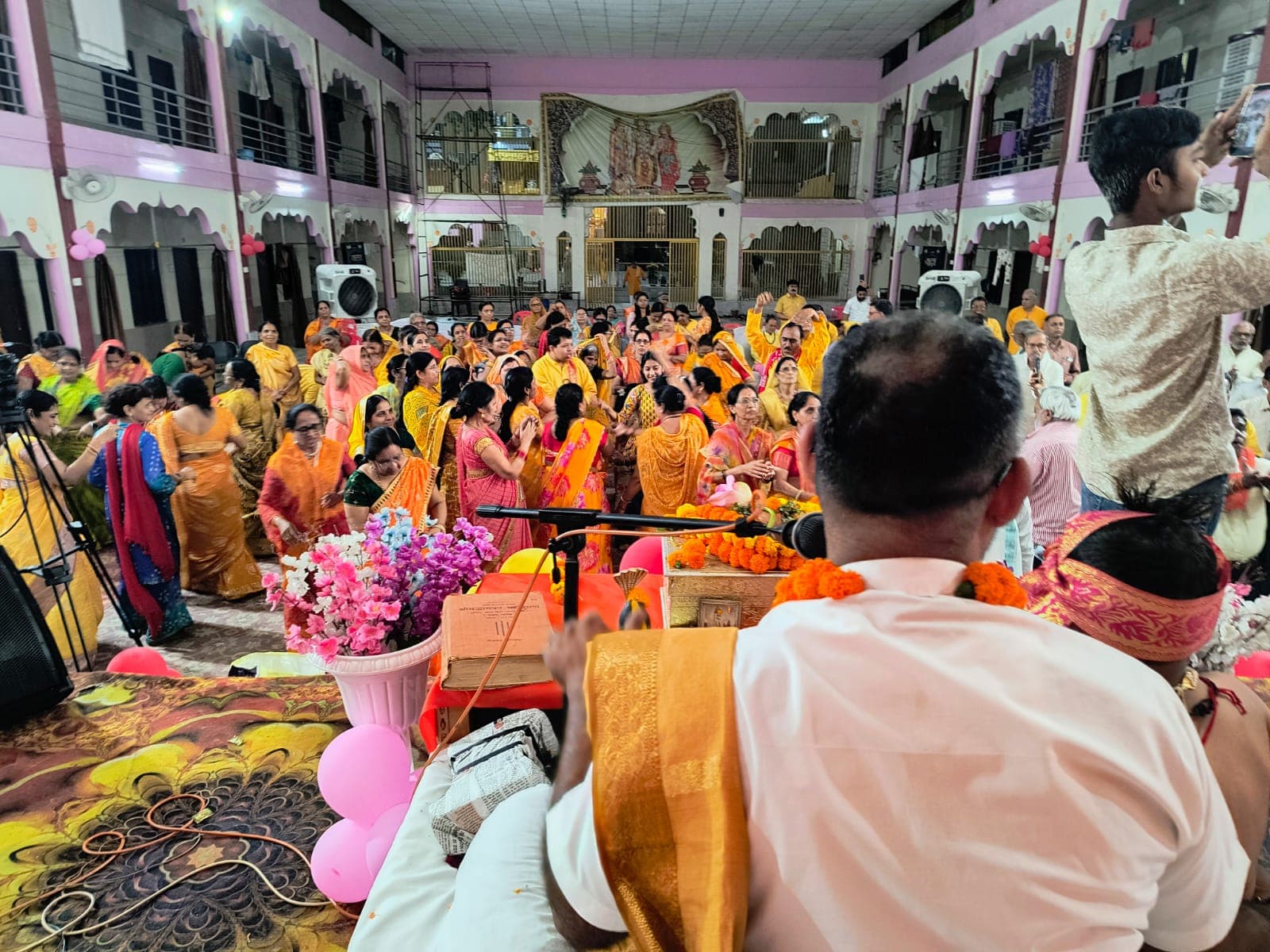
A Bhagwat Katha, a multi-day discourse based on the Bhagavata Purana, is one of the more immersive devotional events in Hindu tradition, often narrated by a trained storyteller. Understanding this practice helps explain why such gatherings are sometimes organised before or after a significant Yatra.
What Is Bhagwat Katha?
Bhagwat Katha is a devotional discourse based on the Bhagavata Purana, typically narrating stories from Krishna's life alongside broader philosophical teachings. It is usually delivered over several days by a trained storyteller known as a katha vachak. References to Bhagwat Katha appear across many regional Hindu traditions, with local interpretation shaping how it is understood by pilgrims today.
Why Bhagwat Katha Is Organised
Families often organise a Bhagwat Katha to mark a significant occasion, fulfil a vow, or seek blessings, inviting the community to attend the multi-day narration. The event combines storytelling, music, and religious teaching into an extended devotional experience. Scholars and temple priests continue to teach and discuss Bhagwat Katha, keeping its relevance alive for each new generation of devotees.
Bhagwat Katha and Pilgrimage Culture
Some pilgrims attend a Bhagwat Katha specifically at a temple town connected to Krishna, such as Vrindavan, combining the discourse with darshan at nearby temples. Others organise a katha at home either before or after completing a significant Yatra as an added act of devotion. Pilgrims encountering Bhagwat Katha for the first time are often introduced to it gradually through family tradition rather than formal study alone.