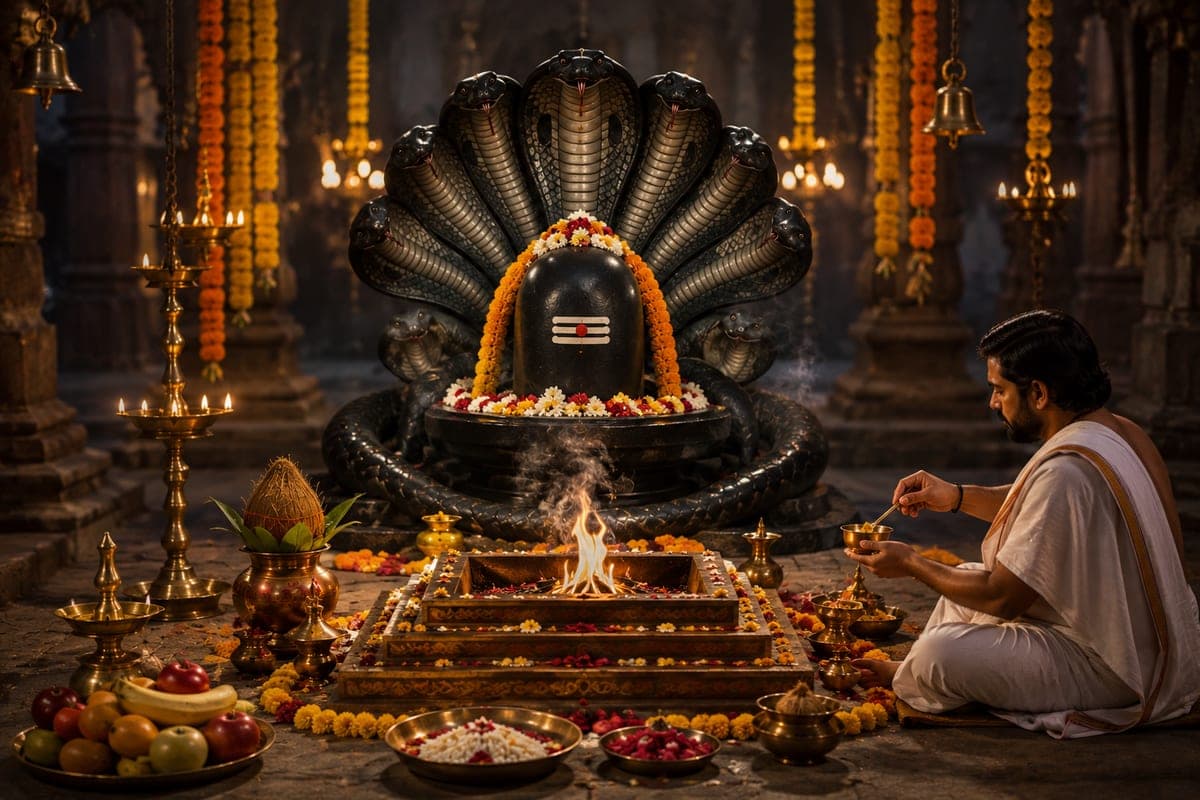
An anushthan, a structured and sustained ritual observance carried out over a defined period, represents a serious level of spiritual commitment within Hindu practice. Understanding this term helps explain why some pilgrims undertake extended preparatory discipline before a particularly significant Yatra.
What Is an Anushthan?
Anushthan refers to a structured, sustained ritual observance, typically involving specific daily practices such as mantra recitation or fasting, undertaken consistently over a fixed period to fulfil a defined spiritual goal. The exact steps involved in Anushthan can vary somewhat between temples, though the underlying devotional purpose remains broadly consistent across India.
Why Devotees Undertake an Anushthan
An anushthan is often undertaken to seek resolution for a significant concern, mark an important life event, or deepen spiritual discipline, requiring considerably more sustained commitment than a single ritual or brief vow. Priests performing Anushthan are generally willing to briefly explain the ritual to curious pilgrims, particularly at quieter, less crowded temples.
Anushthan and Pilgrimage Preparation
Some pilgrims undertake a specific anushthan in the weeks or months leading up to a significant Yatra, viewing this sustained discipline as essential preparation that aligns their spiritual state with the seriousness of the pilgrimage ahead. Many pilgrims specifically arrange Anushthan during their Yatra to mark a personal intention, vow, or family occasion.