Long before elaborate havans and yajnas, the simplest form of Vedic fire ritual, Agni Hotra, was performed daily by households at sunrise and sunset. Understanding this foundational practice helps pilgrims appreciate the deep roots behind the larger fire ceremonies they may witness or sponsor during their Yatra.
What Is Agni Hotra?
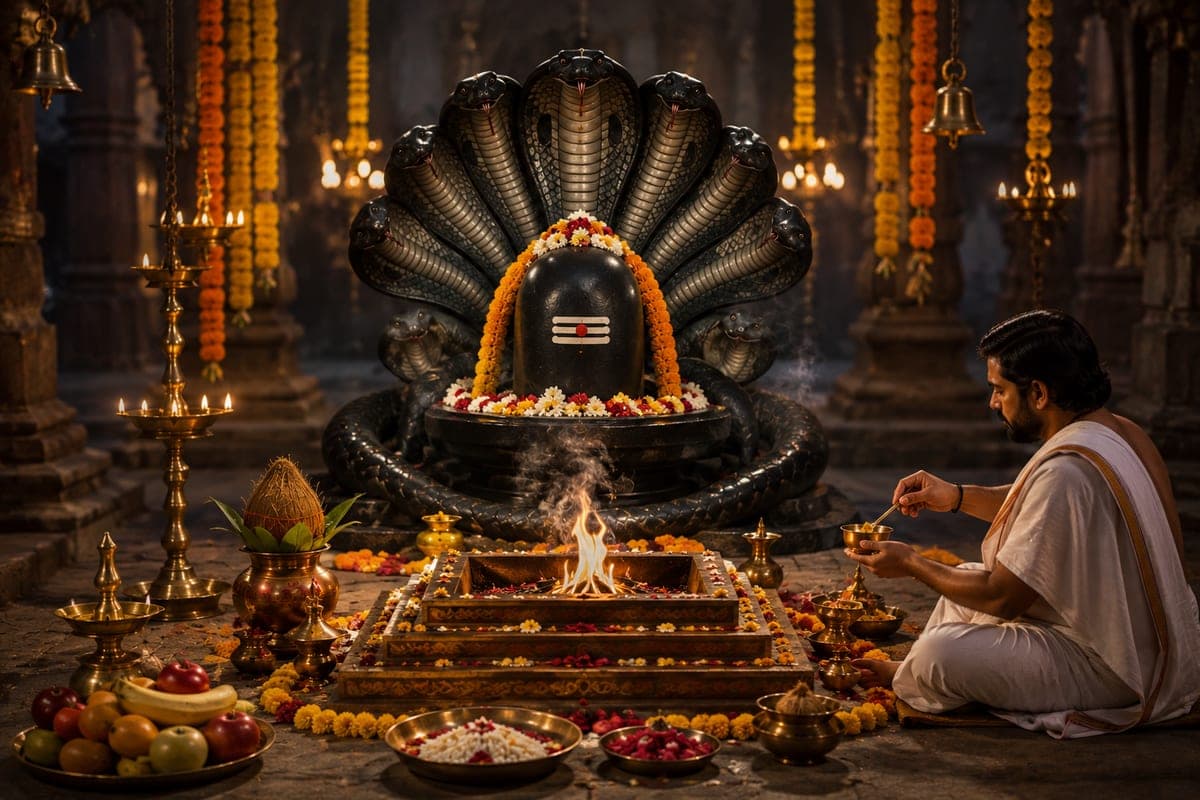
Agni Hotra refers to a simple, daily Vedic fire ritual, traditionally performed at sunrise and sunset, involving basic offerings such as rice and ghee placed into a small sacred fire accompanied by specific mantras. Priests performing Agni Hotra are generally willing to briefly explain the ritual to curious pilgrims, particularly at quieter, less crowded temples.
Agni Hotra Versus Havan and Yajna
While havan and yajna represent larger, more elaborate fire ceremonies performed for specific occasions, Agni Hotra is a simpler, routine daily practice traditionally maintained as an ongoing household discipline. The exact steps involved in Agni Hotra can vary somewhat between temples, though the underlying devotional purpose remains broadly consistent across India.
Agni Hotra and Ashram Life
Some ashrams and traditional households maintain the practice of Agni Hotra as part of daily routine, and spiritual travellers visiting such institutions during their Yatra may witness or be introduced to this foundational Vedic ritual. Many pilgrims specifically arrange Agni Hotra during their Yatra to mark a personal intention, vow, or family occasion.